Contact Us
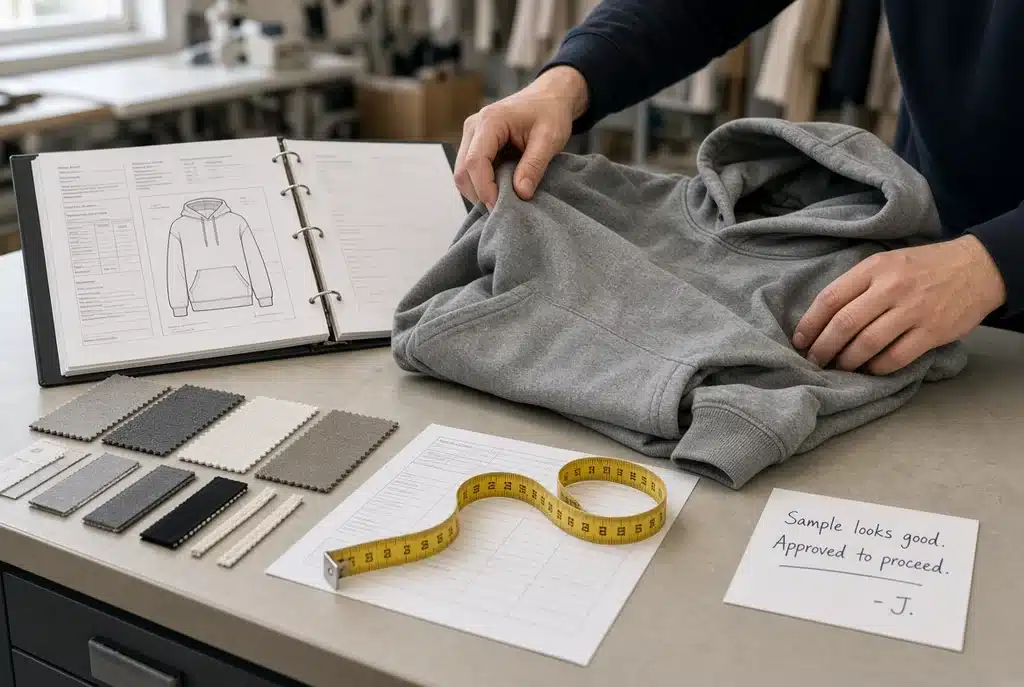
Hoodie sample, measurement sheet, and measuring tape on a work table as a brand evaluates a clothing manufacturer before sampling
Blog

How to Find a Clothing Manufacturer for Your Brand

Founders, product managers, and sourcing leads use this when they need a factory, not a catalog. A useful search checks whether the plant already sews the construction, can develop from the files or sample on hand, and can explain how fit stays consistent. Before you inquire, prepare a one-page brief: style, fabric direction, size range, decoration, a quantity range, and whether a tech pack or reference sample exists.

Apparel sample room with a shirt being measured on a form and a hoodie pre-production sample checked against fabric, trims, artwork, and approval notes
Blog

Fit Sample vs Pre-Production Sample: What’s the Difference?

Founders, designers, and sourcing teams often receive a sample labeled fit, PP, or final and are unsure what it actually approves. This comparison separates a fit review of shape, measurements, ease, and movement from a pre-production review of the version bulk should follow. It shows which sample to use for pattern decisions, which one to approve before cutting bulk, and what neither sample can prove on its own.

Hoodie sample, fleece swatch, rib trim, and spec sheet on a factory costing table, showing the materials and specifications behind a clothing manufacturing cost.
Blog

How Much Does It Cost to Manufacture Clothing? A Complete Cost Breakdown

For founders, designers, and sourcing leads pricing a style before they ask for a quote. A hoodie price that leaves out rib, drawcord, sample rounds, or a retail polybag is not comparable to one that itemizes them. This breakdown shows the costs people usually miss — development, yield, trims, sewing time, decoration, packing, and freight — and how to freeze those assumptions so two factory numbers describe the same garment.

Woven neck label and hoodie pattern pieces on a development table, showing the choice between private label branding and cut-and-sew construction
Blog

Cut and Sew vs Private Label Clothing: Which Manufacturing Model Is Right for Your Brand?

Founders, designers, and sourcing leads often treat cut and sew and private label as rival routes. They are different decisions that can overlap. One is how the garment body is made. The other is whose name, labels, and packing go on it. This guide shows when an adapted branded body is enough, when the body itself must be developed, and how to name the model before you send an inquiry.

Garment pieces cut from a paper pattern laid beside a sample stack on a clothing factory table, showing cut and sew manufacturing before sewing
Blog

What Is Cut and Sew Manufacturing? A Complete Guide for Clothing Brands

This guide is for founders, designers, and sourcing leads who have heard cut and sew and need to know what a factory is asked to do. It clears the mix-up between a garment cut from fabric and a pattern, and a logo printed on a finished blank. Use it to decide whether to own the pattern and construction, or keep the body as a blank, before asking for a sample.

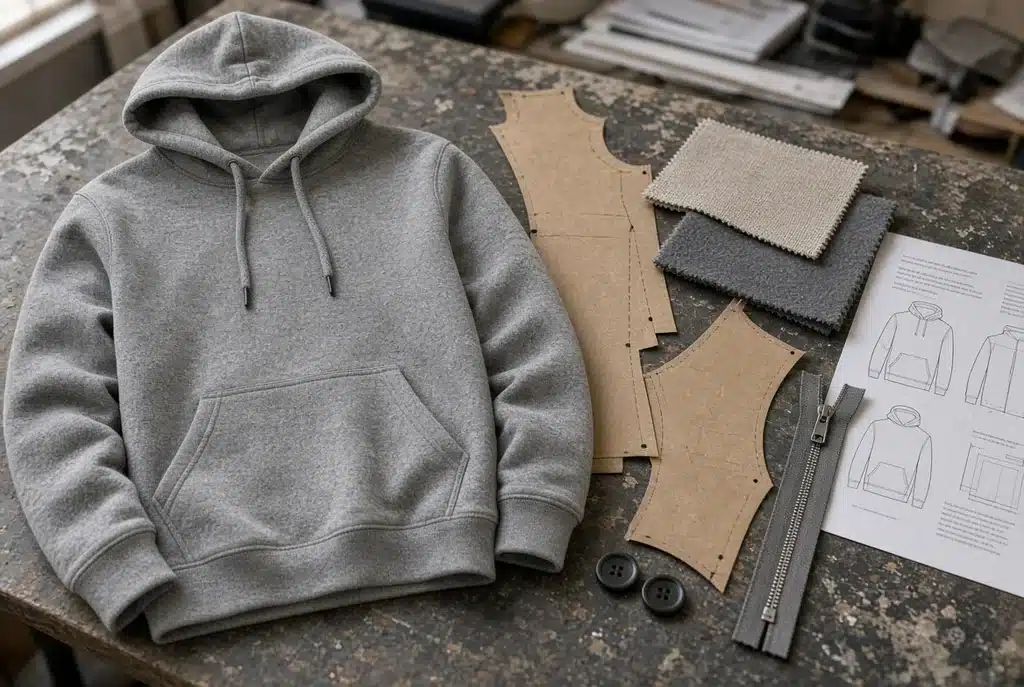
A clothing sample laid with pattern pieces, fabric swatches, trims, and a specification sheet during a sample development cost review
Blog

How Long Does It Take to Make a Clothing Sample?

A clothing sample quote is a development cost, not a bulk unit price. This guide explains the clothing sample price factors founders, designers, product managers, and sourcing teams should check: pattern work, fabric and trims, sewing, decoration, finishing, and revisions. Use it to compare quotes on the same scope, prepare clearer inputs, and avoid hidden development costs without skipping fit or material checks.

Tech pack, fabric swatches, trims, hoodie sample, and measurement notes arranged on a factory table during clothing sample development and approval
Blog

Clothing Sample Development Process: From Tech Pack to Final Approval

This guide maps the clothing sample development process for founders, designers, product managers, merchandisers, and sourcing teams. It follows the work from the first tech pack or design brief through fabric and trim decisions, pattern development, first-sample review, controlled revisions, and a documented approval. The aim is a production reference the factory can repeat, not a casual sign-off that leaves fit, materials, or construction open.

滚动至顶部