
Materials & Product Development
Fabrics & Materials for Custom Garment Manufacturing
Fabric choices shape how a garment looks, feels, fits, and performs. MYB helps brands review materials alongside design, sampling, and production requirements, bringing fabric sourcing and garment development into the same conversation.
Discuss Your Material Requirements
Fabric Composition and Construction
A useful fabric description identifies both the fibers and the way the fabric is made. These two details provide a clearer starting point than a broad label such as “soft fabric” or “premium cotton.”
Fiber Composition
Cotton, linen, polyester, nylon, and viscose are examples of fibers used in apparel. A blend combines different fibers in stated proportions; elastane may be one component of a stretch fabric. Record the composition separately from the construction so material comparisons are meaningful.
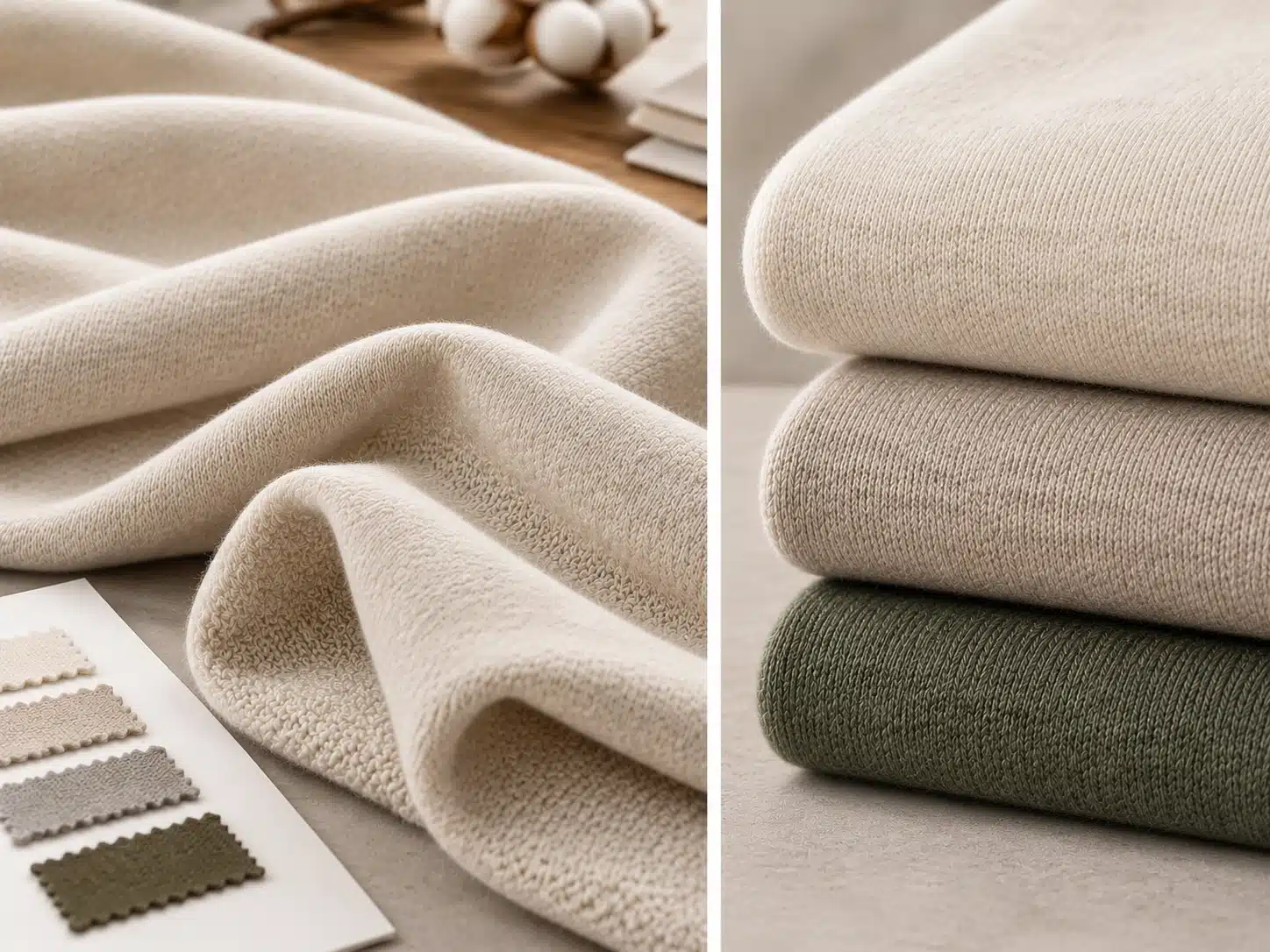
Knitted Fabrics
Knitted fabrics are formed from interconnected yarn loops. Jersey, rib, interlock, and knitted piqué are examples of knit constructions. Names such as French terry and brushed sweatshirt fleece also describe the fabric structure or surface, rather than identifying its fiber composition.
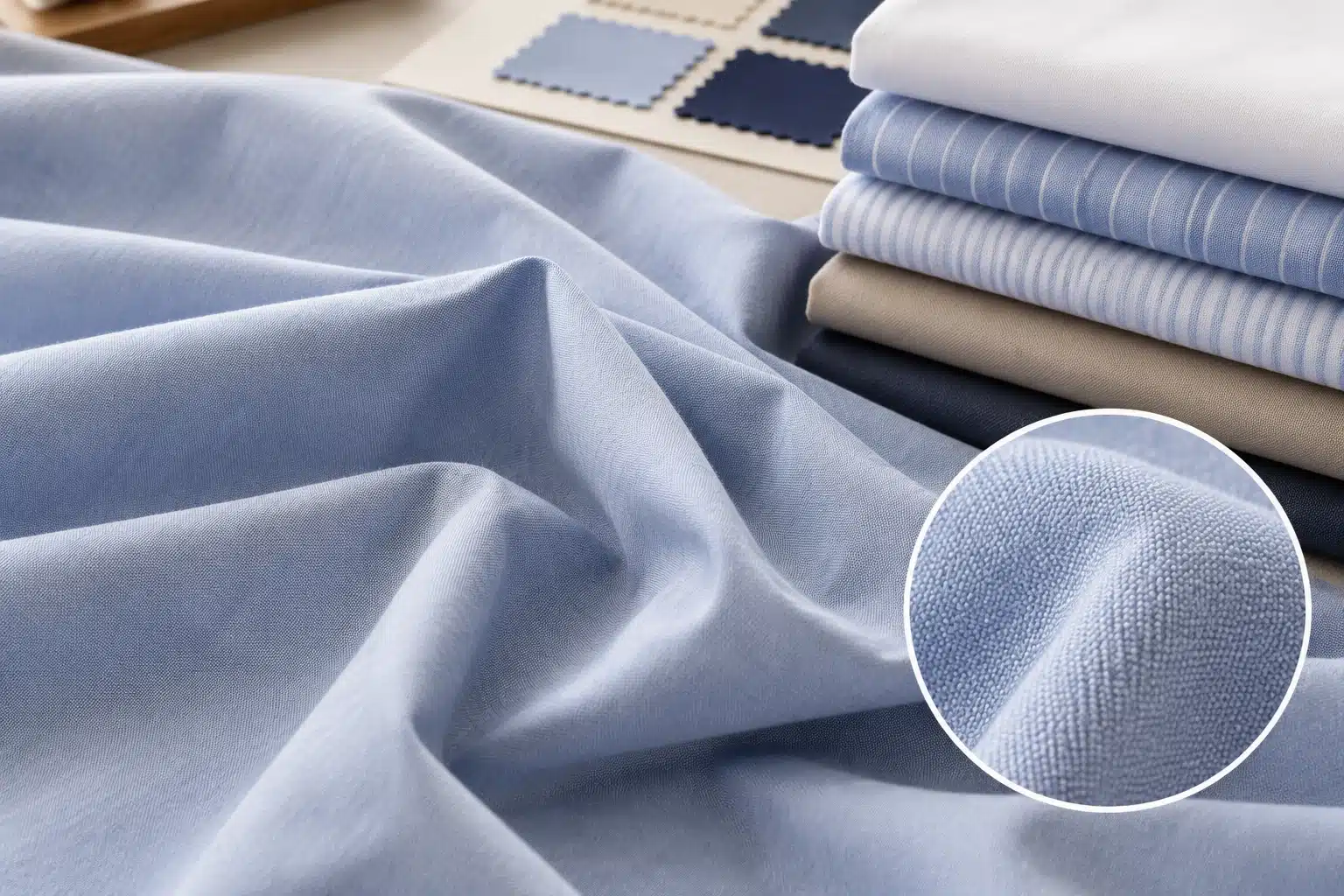
Woven Fabrics
Woven fabrics are formed by interlacing warp and weft yarns. Plain weave and twill describe construction patterns. Either can be made with different fibers and blends, so a construction name alone does not provide a complete specification.
These examples provide a starting vocabulary for your project. Through fabric sourcing support, MYB reviews material options against your garment requirements and budget.
Material Priorities by Garment Type
Start with the product you want customers to wear. The priorities below help turn a general fabric preference into a more useful development brief.

T-Shirts
Decide whether the garment should feel fluid, close-fitting, or structured. For custom T-shirt development, confirm light-shade coverage, neckline behavior, and the surface needed for the planned artwork.
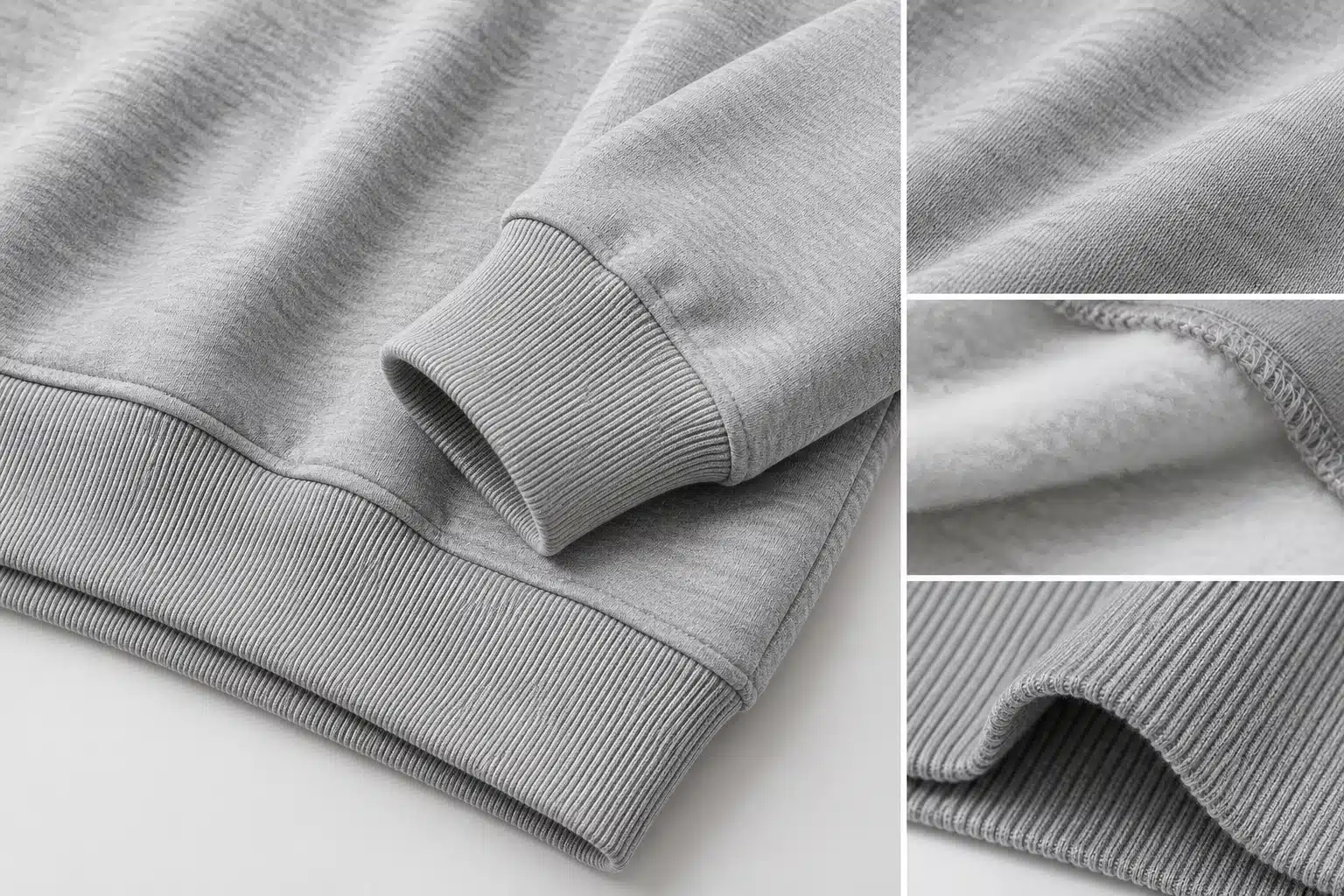
Hoodies and Sweatshirts
Describe the intended bulk and inside surface, such as a loopback or brushed finish. Review the relationship between the body fabric and rib cuffs, hem, or neck trim in the assembled sample.
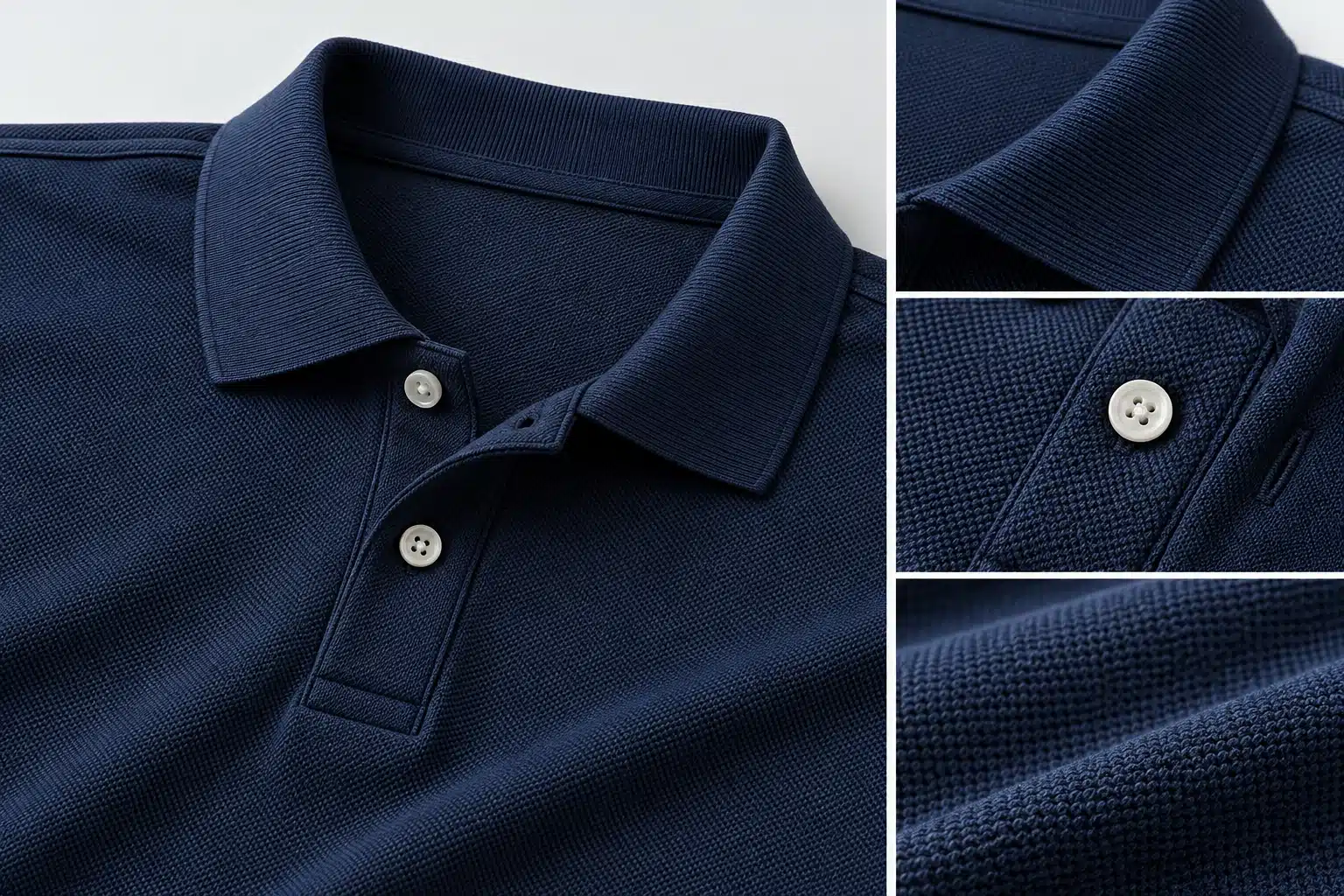
Polo Shirts
Consider how the body fabric works with the collar and placket. Review the chosen surface alongside embroidery placement so the front of the garment has the intended appearance.

Activewear
For custom activewear, define the activity and desired fit first. Review coverage during movement, recovery, seam compatibility, and any moisture-management requirements for that use.
Shirts and Trousers
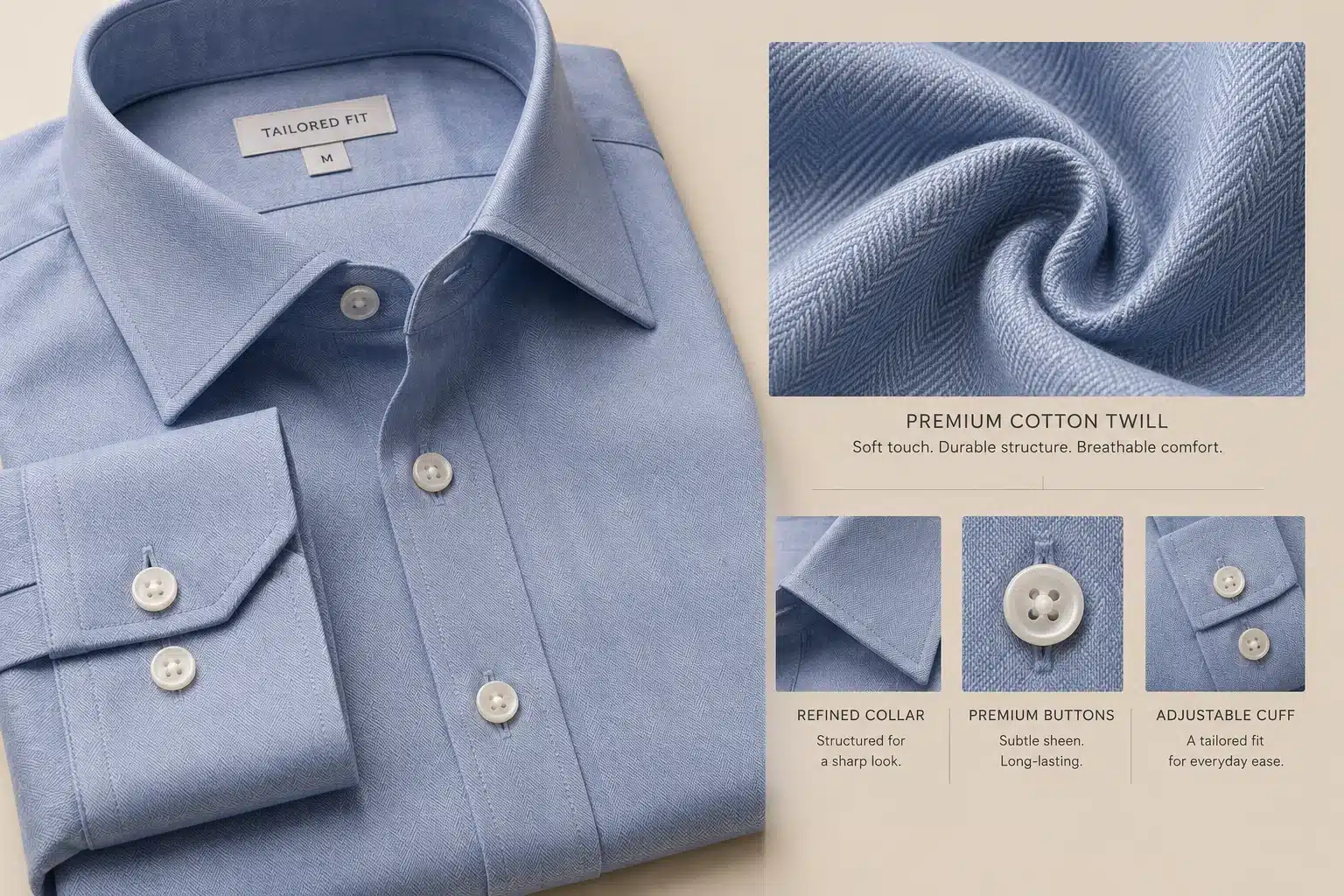
Identify where the design needs structure and where it needs movement. Examine collars, cuffs, waistbands, and pockets as applicable, together with the garment’s intended pressing and care requirements.

Dresses and Loungewear
Use the silhouette and intended wearing conditions to guide the choice. Review how the fabric falls over seams and gathers, whether lining is needed, and how it feels against the skin.
Supporting Materials and Compatibility
The main fabric is one part of the garment. Supporting materials and decoration should be reviewed together so the finished product works as intended.

Linings and Interlinings
Review the lining’s movement and weight alongside the outer fabric. Where interlining is used, confirm its effect on the finished shape, surface, and care requirements.
Rib, Elastic, and Closures
Cuffs, waistbands, zippers, and other trims need to work with the surrounding fabric. Review their attachment, bulk, appearance, and behavior after the intended care process.
Printing, Embroidery, and Finishing
The fabric surface, stretch, and response to processing can affect decoration. Review artwork or stitch samples on the intended material, and confirm any washing or finishing effects before approving the combination.
Material Specifications and Sample Confirmation
MYB coordinates fabric selection with pattern making, sampling, and production requirements. A clear material record helps the team work toward the same reference throughout development.
1. Build the Material Reference
Bring together the fabric reference or swatch, composition, construction, target weight, color, and finish. Add intended use, care requirements, budget, and any required documentation. Mark which details are fixed and which remain open for review.
2. Review the Material in a Garment
Use sample development to evaluate the material in the proposed fit and construction. Record observations about appearance, movement, decoration, and any agreed care or performance checks. Label substitute materials clearly so their approval status is understood.
3. Record Approval and Changes
Confirm the selected material and related trims against the latest specification. Keep written revision notes alongside the approved sample reference so later material changes can be reviewed before use in production.
