
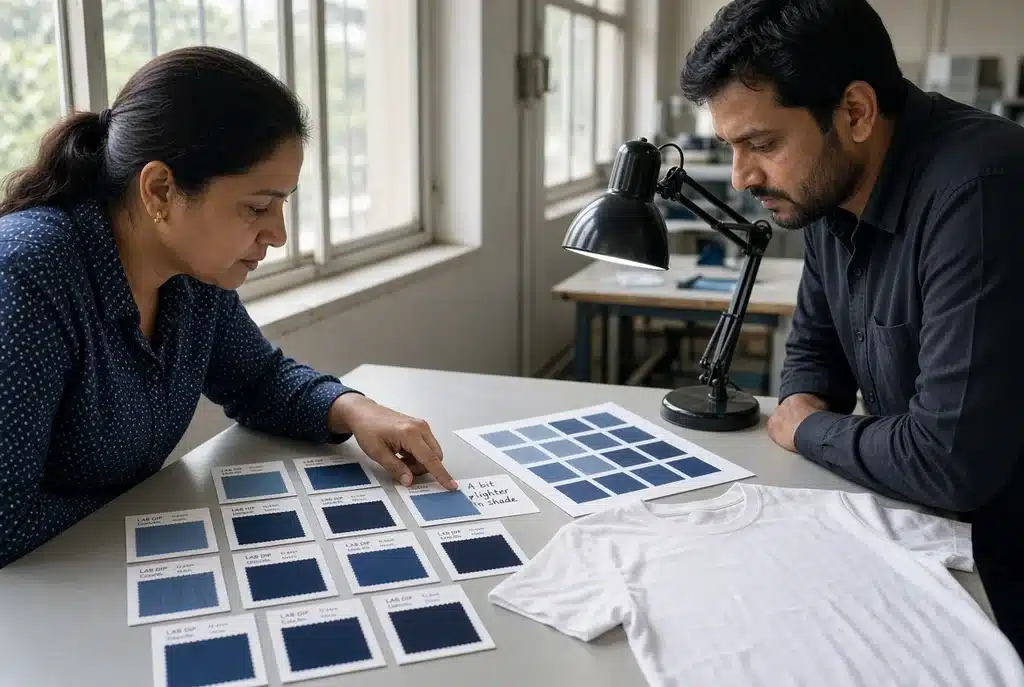
How to Source Fabric for a Clothing Line: From Material Brief to Bulk Production
Written for founders, product managers, and sourcing leads who need a repeatable way to source fabric for a clothing line. It clears up vague briefs, incomparable quotes, and bulk that does not match the approved swatch. You will see how to write a spec, shortlist suppliers, approve color and hand feel, run the tests that matter, and lock fabric before cutting.

French Terry vs Fleece: Which Fabric Is Better for Hoodies and Sweatshirts?
Founders, designers, and product managers often treat French terry and fleece as interchangeable hoodie fabrics. They are not. This guide explains how the back finish changes hand feel, warmth, drape, and season fit, then walks through the decisions that separate a clean transitional sweatshirt from a cold-weather staple. Use it to match fabric to climate, layering, and brand position before you lock a sample.
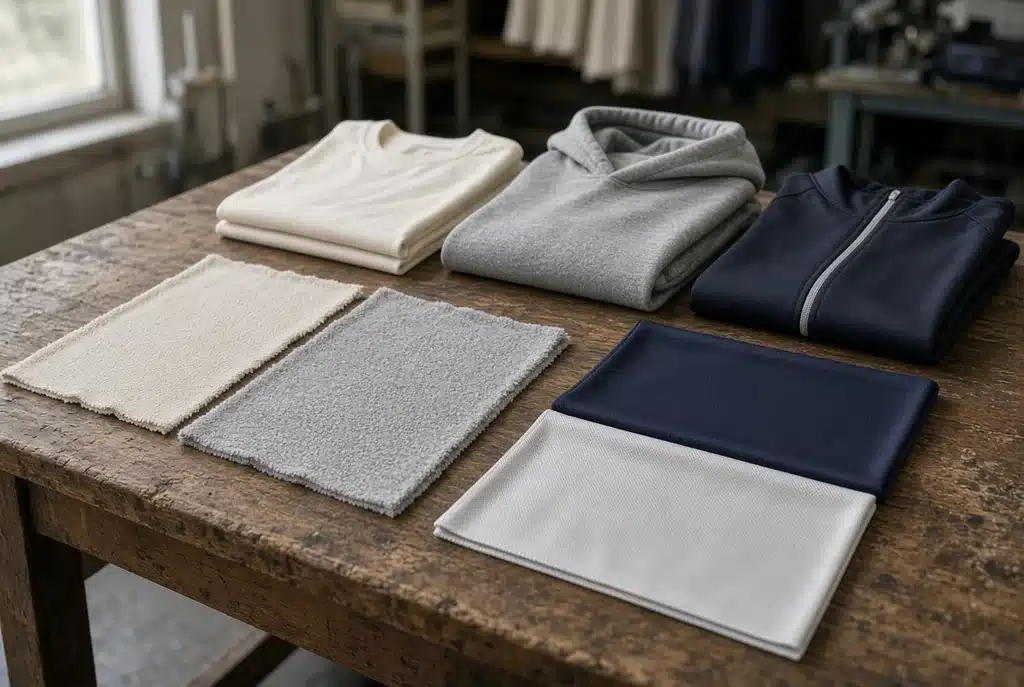
Cotton vs Polyester: Which Fabric Is Better for Your Clothing Line?
Founders, designers, and product managers often stall on cotton versus polyester because the two fibers solve different jobs. This guide explains how each one behaves in real garments: hand feel, breathability, moisture, durability, print, shrinkage, and care. You will leave with a clearer way to match fiber to garment use, brand positioning, and price architecture, including when a cotton-poly blend is the smarter call.

Knit vs Woven Fabric: How to Choose the Right Construction for Your Garment
Founders, designers, and product managers often pick a fiber and then find the garment still feels wrong. This guide separates knit from woven construction and shows how that choice changes stretch, recovery, drape, and garment type. You will see where jersey, fleece, poplin, and twill belong, which mistakes cause restricted movement or a shape that will not hold, and how to decide construction before locking a fabric spec.

What Is GSM in Fabric? A Practical Weight Guide for Clothing Brands
Written for founders, designers, and product managers who are tired of vague “heavyweight” claims. This guide explains what GSM in fabric actually measures, how weight changes hand feel, drape, opacity, and seasonality, and where T-shirt, hoodie, woven, and activewear programs usually start. It also shows how to brief a mill and avoid costing or bulk surprises that come from treating grams as the only quality test.

Custom Hoodie MOQ Explained: What Determines Your Minimum Order Quantity?
A custom hoodie order does not have one industry minimum. Fabric, color count, size breakdown, construction, decoration, labels, and packaging all change what a factory can accept. This guide helps founders, merchandisers, and sourcing teams plan a first hoodie run or a trial order without treating MOQ as one published number. It also explains why a small run can cost more per piece, and which questions to ask before you commit.

How Much Does It Cost to Manufacture Custom Hoodies?
Custom hoodie quotes are hard to compare when fabric, construction, decoration, and packing are not stated. This article walks clothing brands, startups, and sourcing teams through the variables that change a hoodie quote, from GSM and pattern complexity to sampling, labels, and freight. Use it to build a comparable cost brief and spot charges a unit price leaves out.
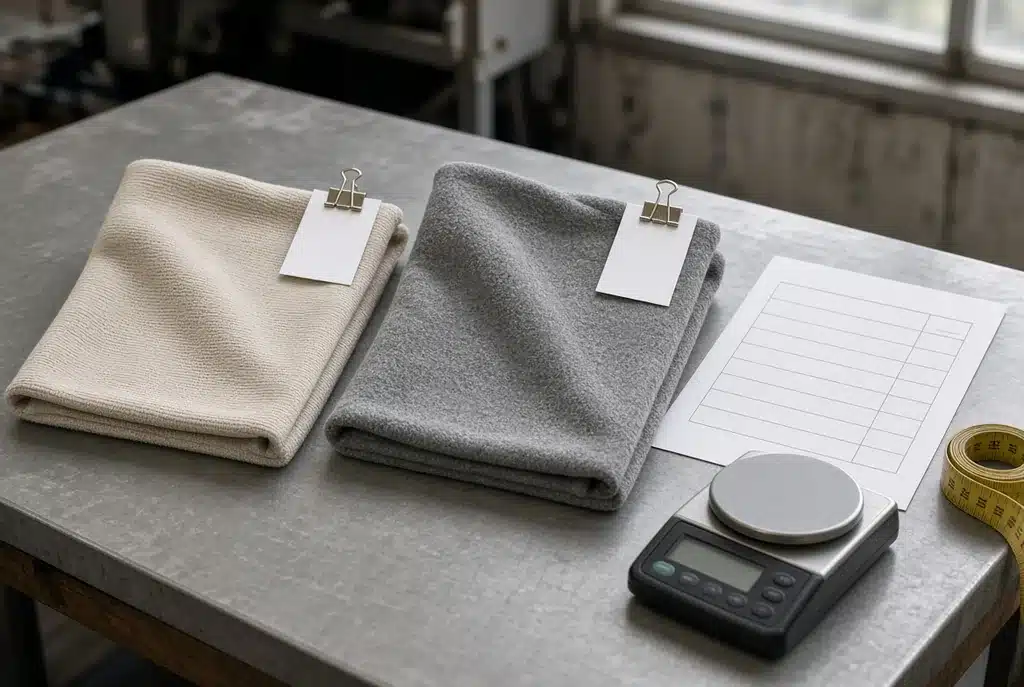
French Terry vs Fleece for Hoodies: Which Fabric Should Your Brand Choose?
A hoodie fabric name is not a product decision. This article helps clothing brands and apparel buyers choose between French terry and fleece based on season, silhouette, hand feel, cost drivers, finishing, and sampling needs. It explains loopback versus brushed interiors, how GSM changes warmth and drape, and what a finished sample should prove before bulk production.