
FROM REQUIREMENTS TO FINISHED GARMENTS
Garment Manufacturing Process
Follow how MYB takes your garment requirements through material sourcing, sampling, production, inspection, and packing. Understand what happens at each stage, where your input is needed, and how approved details guide the work that follows.
Discuss Your Project
Requirement Review & Material Sourcing
A useful production plan starts with a clear understanding of the garment. MYB reviews your designs, tech packs, reference samples, intended quantities, target pricing, and delivery requirements to identify what needs to be developed or clarified.
Material sourcing then connects those requirements with fabric and trim options suited to the product. Composition, weight, structure, hand feel, color, and intended use help guide the discussion.

Information to share at this stage includes:
For a closer look at material selection, explore our fabric sourcing service.
The aim is to establish a workable development direction and identify missing information before patterns and samples are prepared.
Pattern Making & Sample Development
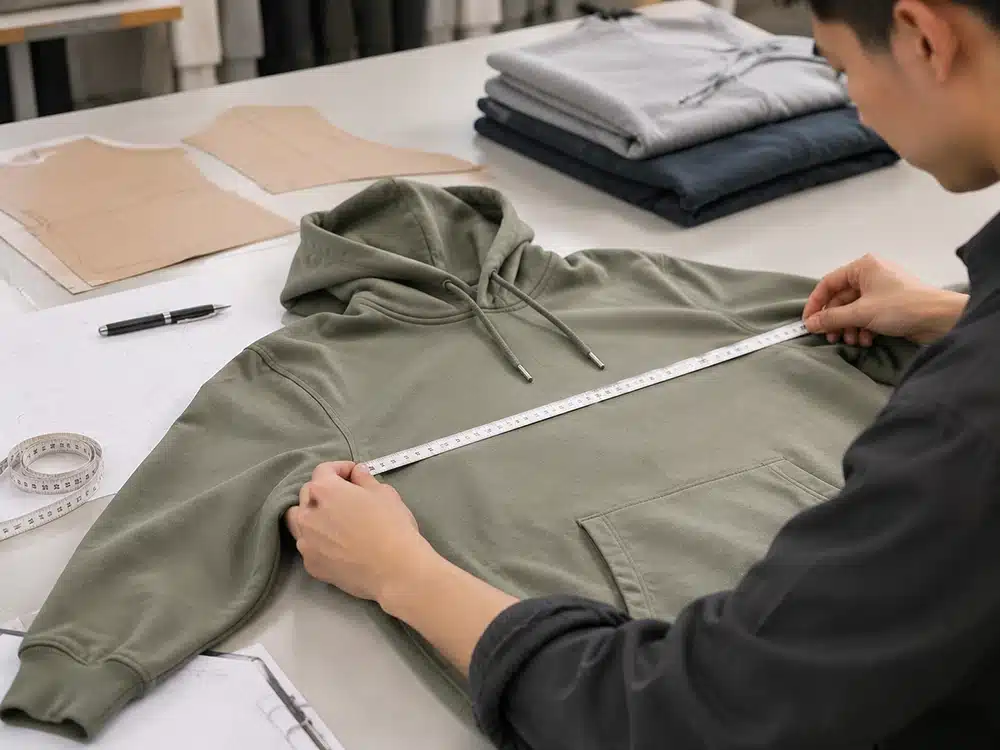
Patterns translate the design into garment shapes and construction details. Samples then make those decisions tangible, giving you a garment to review before bulk production is prepared.
During sampling, the review focuses on how the elements work together:
- The silhouette, fit, and key measurements.
- Fabric behavior, appearance, and hand feel.
- Seams, pockets, closures, and other construction details.
- Label positions, decoration placement, and branding details.
Specific feedback is more useful than a general request to improve the fit. Identify the area to revise, the intended result, and any measurements or reference details that explain the change.
Our sample development service covers this evaluation stage in more detail. The feedback from sampling helps define the revisions needed before approval.
Cutting, Sewing & Finishing
Bulk production turns the approved requirements into finished garments. The work follows the construction and finishing needs of the style, with the approved sample and production instructions providing the reference.

Cutting
Fabric is cut into the panels and components needed for the garment, following the approved pattern shapes and size requirements.
Sewing and assembly
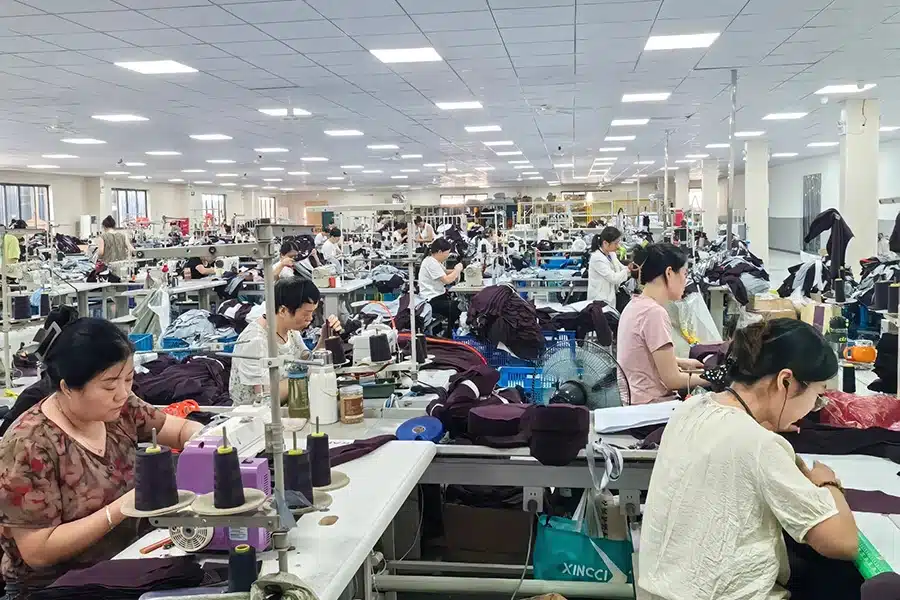
The cut components are joined to form the garment. Seams, pockets, collars, sleeves, closures, and other details are assembled according to the specified construction.
Decoration and finishing
Printing, embroidery, washing, and other finishing processes are completed where required. Their place in the production sequence depends on the garment and the selected process.
In-line checks during production help identify workmanship or measurement issues while the order is being made. Once the required production operations are complete, finished garments move into final inspection.
Final Garment Inspection
Finished garments are checked against the approved sample and agreed order requirements. The purpose is to review the completed product before packing, including details that may be less apparent while individual production operations are still underway.
The review covers:
- Workmanship, seams, construction, and visible appearance.
- Measurements against the agreed specifications.
- Printing, embroidery, and other applied details where relevant.
- Labels and branding details required for the order.
Clear specifications make the inspection reference easier to interpret. Any requested testing, inspection method, or acceptance criteria should be discussed for the specific project rather than assumed to apply to every order.
Our production inspection page explains inspection activities in more detail.


Packing & Shipment Coordination
After final inspection, finished garments are packed according to the agreed buyer instructions and prepared for delivery. Packing brings the order together in the arrangement needed for handling, shipment, and receipt.
Requirements to confirm include:
- How garments should be folded and individually packed.
- Size and color grouping, quantity arrangements, and carton marks.
- Delivery details and any buyer-appointed logistics contacts.
MYB supports export packing and international shipment coordination. The shipment plan needs to reflect the order's readiness, destination, and agreed delivery requirements.
For more about this handover, see global shipment coordination. Freight arrangements and responsibilities should be clarified for the individual order.