


Screen Printing vs DTG vs DTF: Which Is Best for Custom T-Shirts?
This guide helps clothing brands match a printing method to fabric, artwork, quantity, color, and the finish they want, instead of choosing by trend or price alone. Screen printing, DTG, and DTF each fit different T-shirt jobs. The same graphic can shift on a white cotton tee, a dark cotton tee, and a polyester blend. Approve a physical sample before bulk.
What Is POM in Garment Measurement? Points of Measure Explained
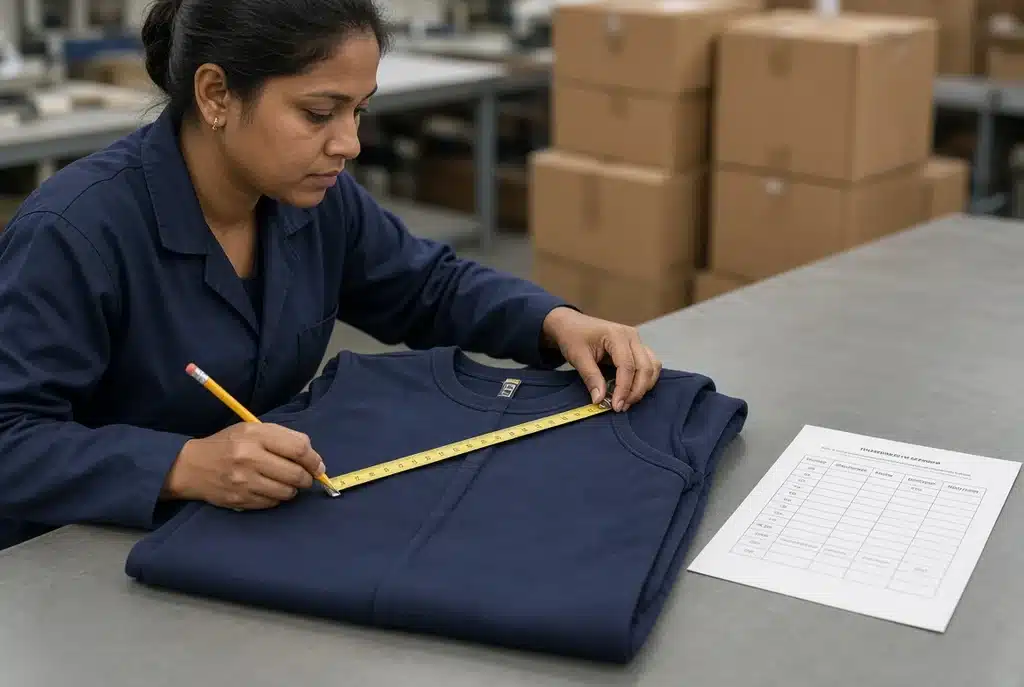
Founders, product managers, and sourcing leads use this guide to stop spec and inspection disputes before cutting. It explains what a point of measure is, how to name it by garment and size, and how landmark, direction, grade, and tolerance differ. Readers leave with a minimum POM set for tees, hoodies, trousers, and shirts, plus a checklist they can paste into a purchase order.

How Long Does Custom Kids Clothing Manufacturing Take?
This guide is for kidswear brands, retailers, and sourcing managers setting a launch or delivery date. A single lead-time number is unreliable because custom children’s clothing depends on tech-pack readiness, material availability, sample revisions, and how fast approvals return. Map development, sourcing, sampling, pre-production, bulk sewing, inspection, packing, and shipment before you lock a calendar.
Kids Clothing Quality Control Checklist for Bulk Production
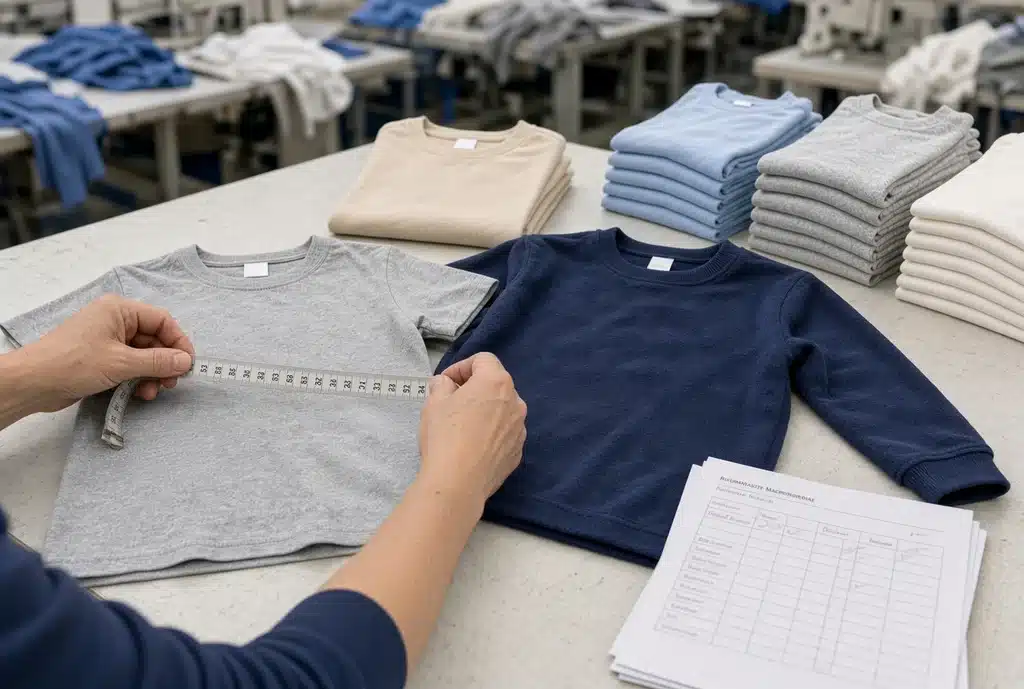
This kidswear QC checklist is for brand founders, buyers, and production teams reviewing a bulk children’s order. Kidswear needs more than a general garment inspection: age-specific fit, neck openings, small trims, comfort, labels, and size consistency sit beside ordinary workmanship. The guide walks through incoming materials, in-line sewing, measurement checks, decoration, labels, packing, and the record to keep before a bulk order is released.
Kids Clothing Size Grading: How to Build Consistent Sizing
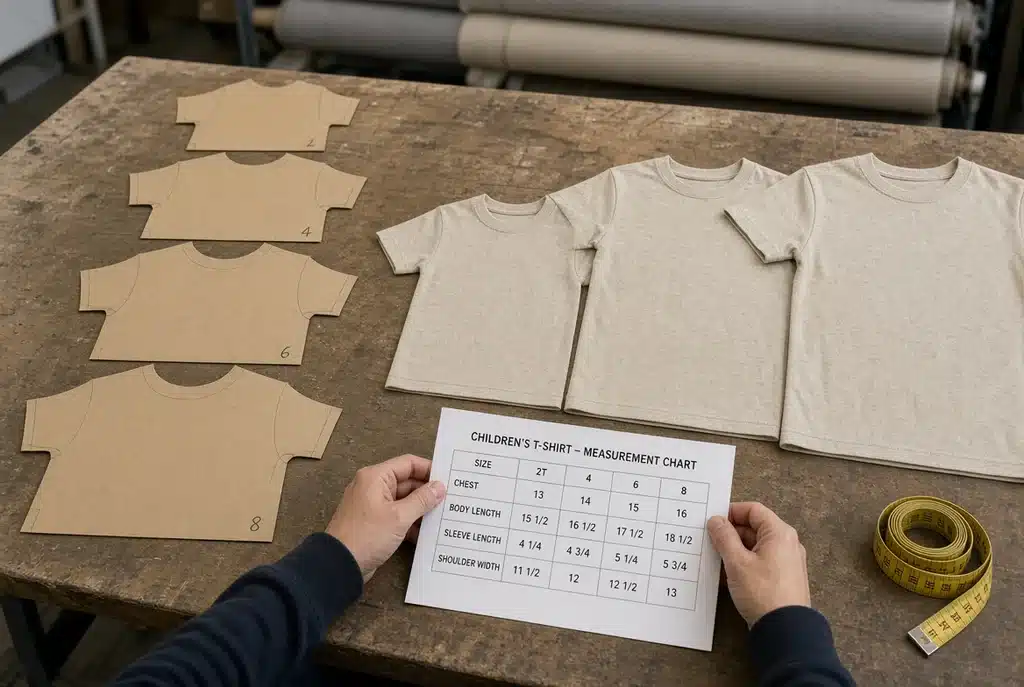
Kidswear founders, technical designers, and sourcing teams use this guide when a children’s size run has to hold before bulk. A kids chart is not a reduced adult chart. Age blocks, a reviewed base size, points of measure, grade rules, ease, and size-set checks have to be set for the actual garment. The example is a toddler and school-age T-shirt and jogger range, with no universal increments.
Best Fabrics for Kids Clothing: A Guide for Apparel Brands
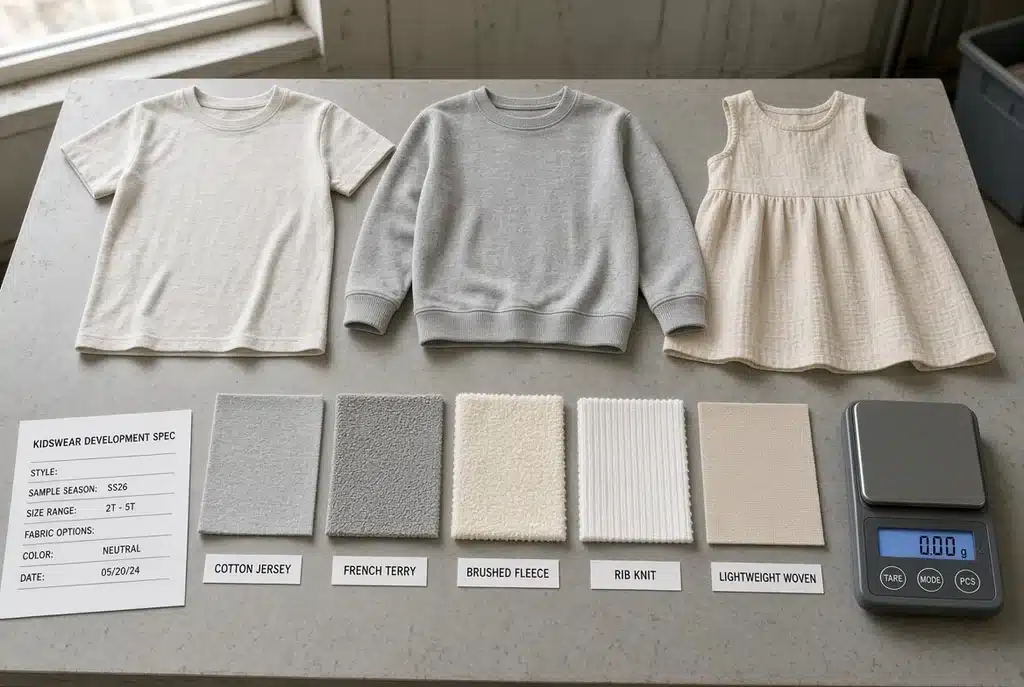
This guide helps kidswear founders, designers, and sourcing teams choose fabric by garment job rather than by fiber name alone. Softness is only one input. Weight, knit or woven structure, stretch and recovery, shrinkage, color repeatability, decoration, and bulk availability decide whether a T-shirt, sweatshirt, jogger, or summer dress actually works. Use it before you request swatches, approve a sample, or lock a bulk material.