Contact Us
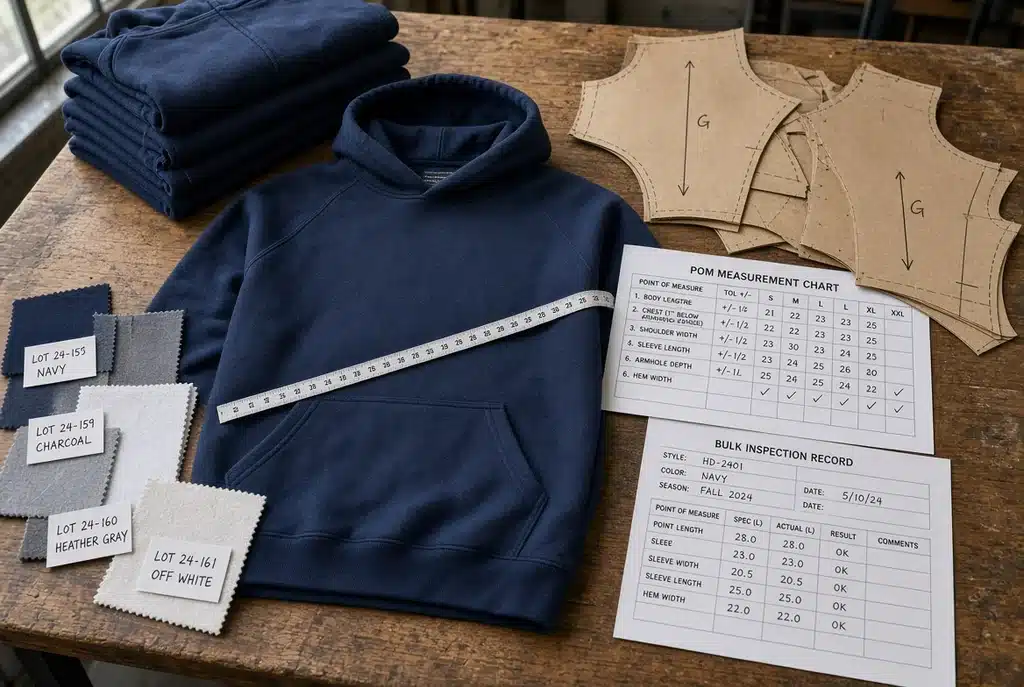
Apparel technical workspace showing an approved garment sample, POM chart, measuring tape, graded patterns, fabric swatches, bulk garments, and inspection records used to control garment fit and measurements from sample to bulk production.
Blog

How Garment Fit and Measurements Move From Sample to Bulk Production

A practical fit-control guide for clothing brands, designers, merchandisers, and sourcing teams. It explains how garment fit, finished measurements, grading, fabric behavior, and tolerances should move from an approved sample into bulk, and which production checks keep specifications intact through first-piece, in-line, final inspection, and repeat orders.
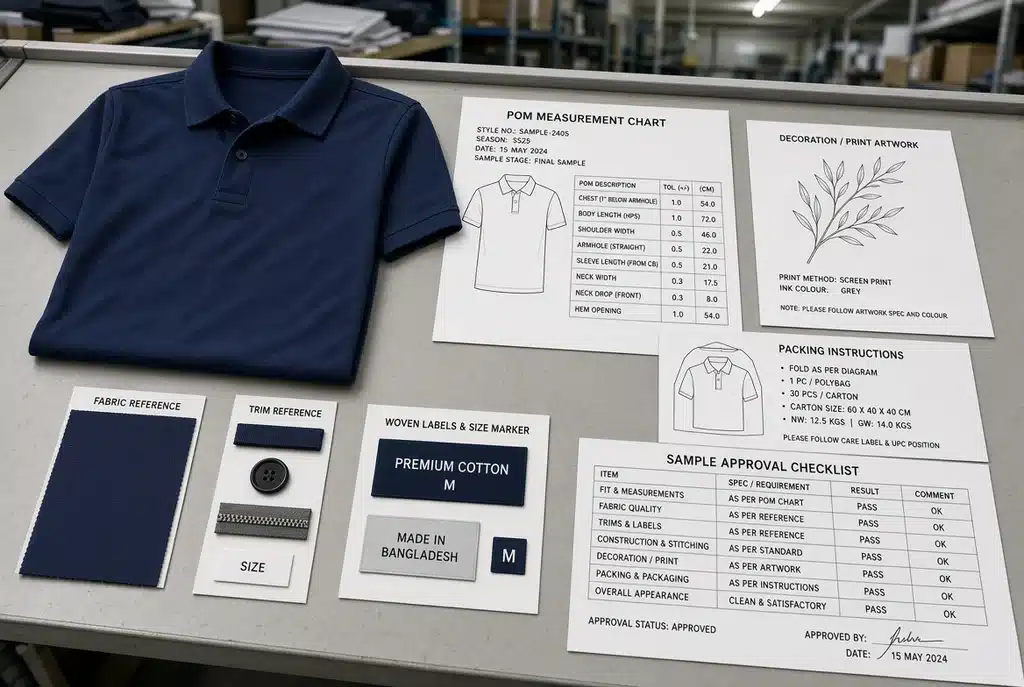
Clothing brands reviewing a pre-production sample with measurement chart, fabric swatches, labels, artwork, packing notes, and a pre-production sample approval checklist before bulk production.
Blog

Pre-Production Sample Approval Checklist for Clothing Brands

This production-approval guide helps clothing brands, startups, retailers, and sourcing teams review a pre-production sample before bulk manufacturing. Use it to confirm the final garment, identify unresolved risks, document deviations, and prevent bulk-production mistakes. The checklist covers materials, measurements, construction, decoration, labels, packing, and the written release that should lock cutting.

Private label clothing fabric-sourcing desk with fabric rolls, swatches, GSM and composition notes, lab dips, trims, a garment sample, and a production-planning worksheet
Blog

Fabric Sourcing for Private Label Clothing: What Brands Need to Decide

This practical guide helps private label brands, startups, retailers, and apparel buyers plan fabric selection before sampling and bulk production. It shows how to choose materials by garment use, handfeel, performance, cost, MOQ, lead time, and quality, and how to confirm the same fabric can support repeat orders.

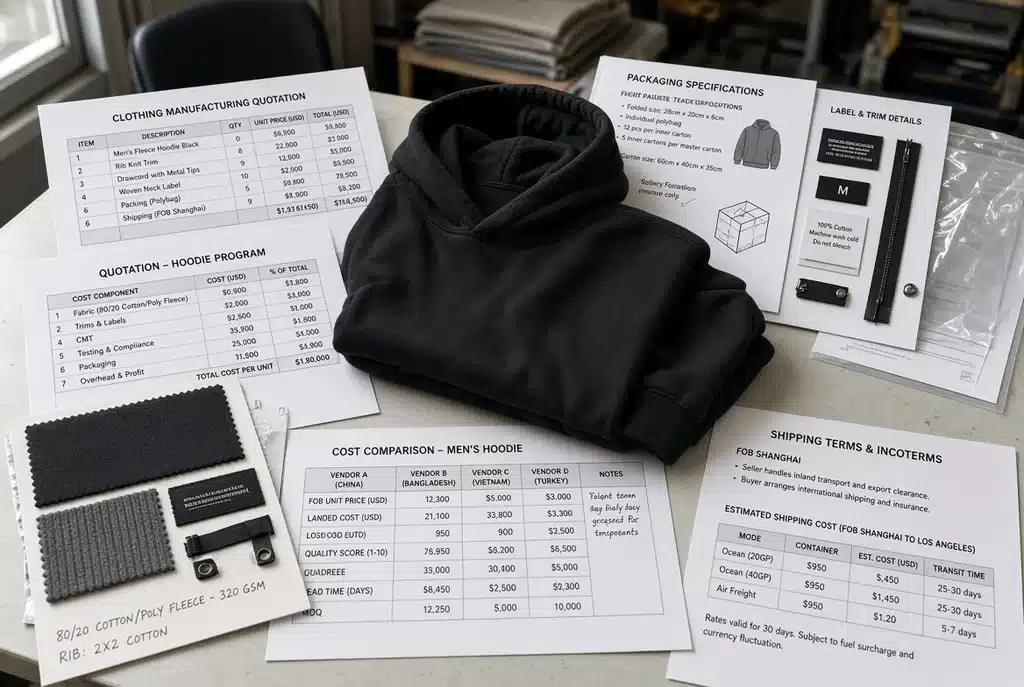
Apparel sourcing desk with supplier quotations, hoodie sample, fabric cards, labels, packaging notes, landed-cost worksheet, and shipping documents used to compare clothing manufacturing quotes beyond unit price.
Blog

How to Compare Clothing Manufacturing Quotes Beyond Unit Price

A practical sourcing guide for clothing brands, startups, retailers, and procurement teams. It shows how to spot hidden exclusions, normalize supplier assumptions, compare total landed cost, and choose the production offer that is actually comparable—not just the lowest unit price.

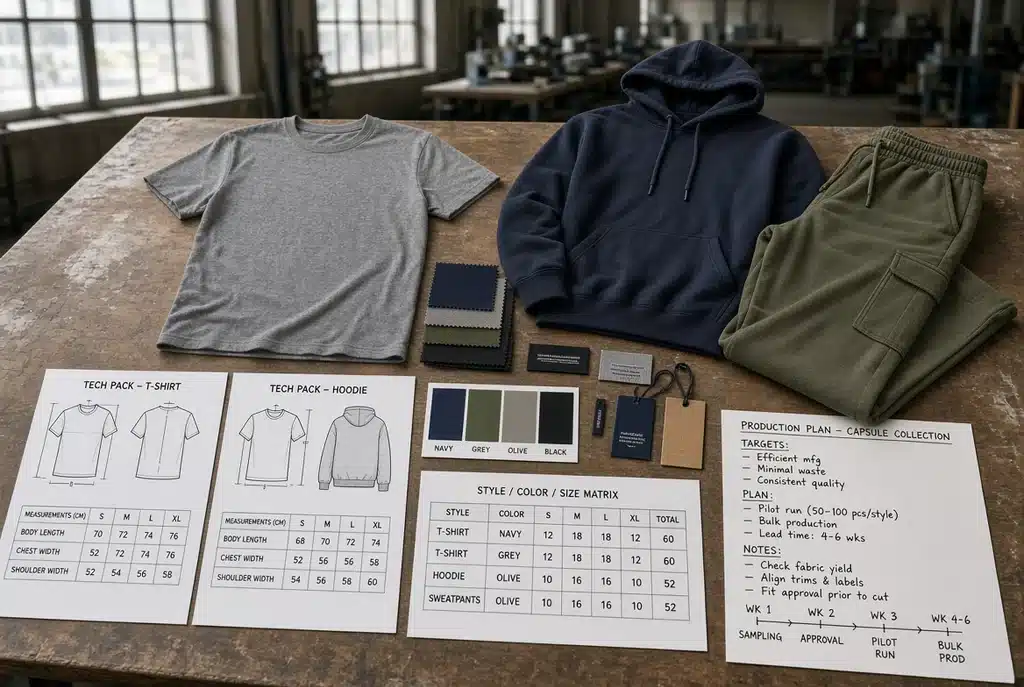
Apparel product-development workspace showing a private label capsule collection planned for efficient manufacturing, with coordinated garment styles, shared fabric swatches, a limited color palette, labels, tech packs, a style-color-size matrix, and production-planning notes.
Blog

How to Plan a Private Label Capsule Collection for Efficient Manufacturing

A practical planning guide for startups, private label brands, retailers, and growing fashion companies building a coordinated capsule. It shows how shared fabrics, clear style roles, controlled SKUs, workable MOQ, sampling, branding, and replenishment reduce production complexity, inventory risk, material fragmentation, and extra development work.

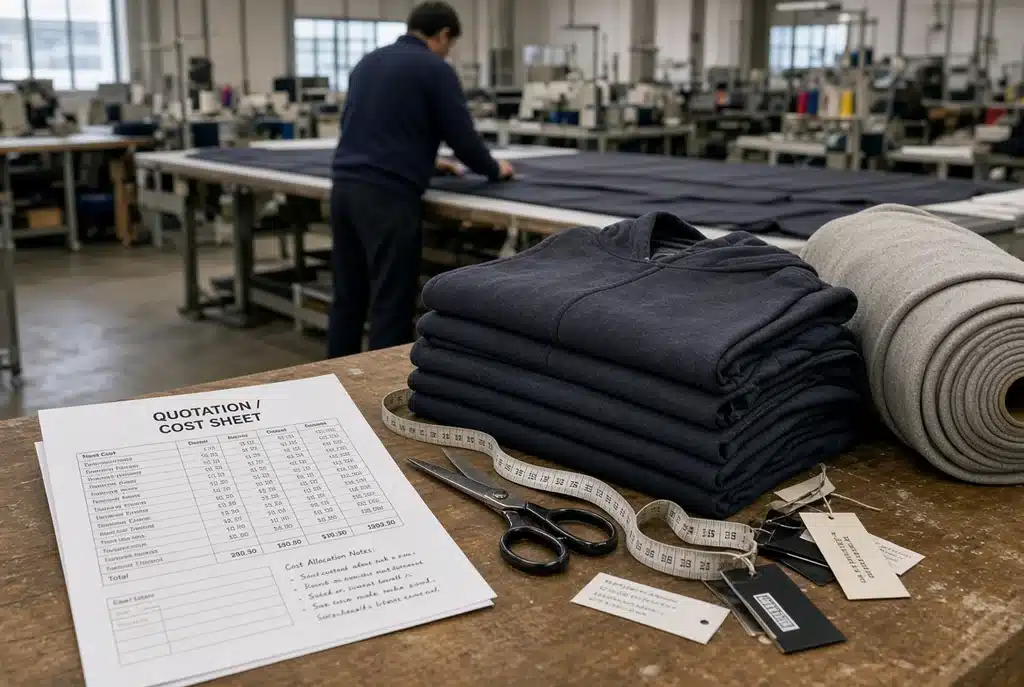
Factory costing desk with a small men’s clothing run, fabric and trim setup, cutting preparation, and a quotation showing fixed production tasks spread across fewer garments.
Blog

Why Low-MOQ Clothing Production Usually Has a Higher Unit Cost

This guide helps startups, private label brands, and small clothing businesses understand why low-MOQ production often carries a higher unit cost. Fixed setup, materials, labor, decoration, packaging, and scheduling still apply, then get divided across fewer garments. A smaller order can still make sense when it cuts inventory risk.

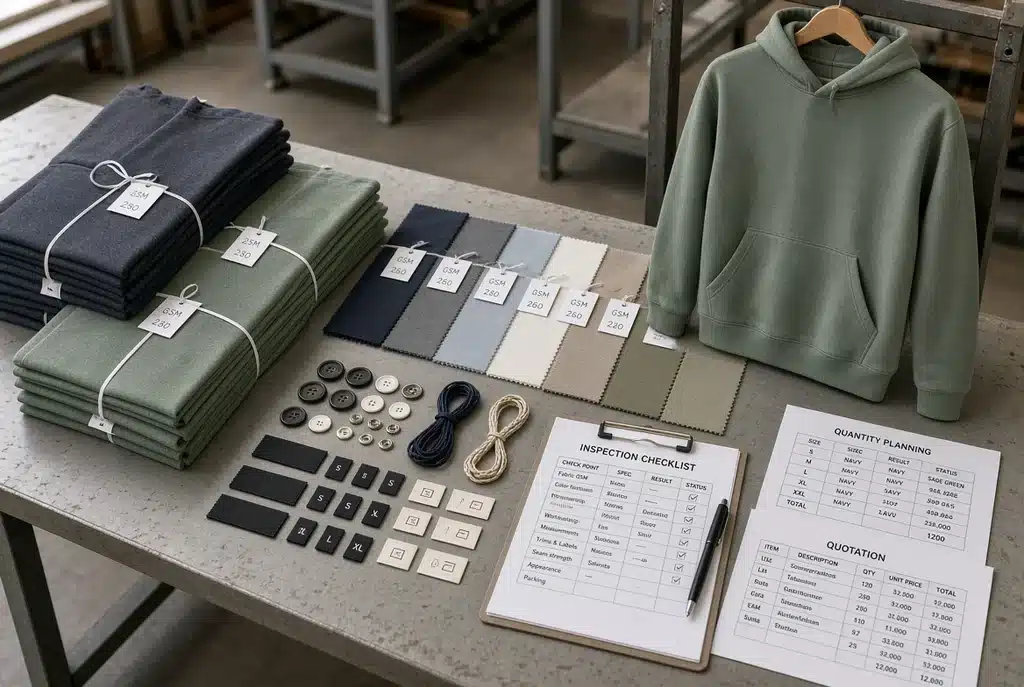
Focused men’s garment bundles, stock fabric swatches, shared trims, approved sample, inspection tools, and a quantity-planning sheet showing quality-preserving low MOQ clothing production
Blog

How to Reduce Clothing MOQ Without Compromising Product Quality

This guide helps startups, private label brands, and small apparel businesses lower production minimums without skipping sampling, material checks, quality control, or brand-critical details. It shows how fewer styles, focused colorways, stock materials, shared trims, controlled decoration, and staged orders can reduce clothing MOQ while keeping fit, fabric performance, and inspection standards intact.

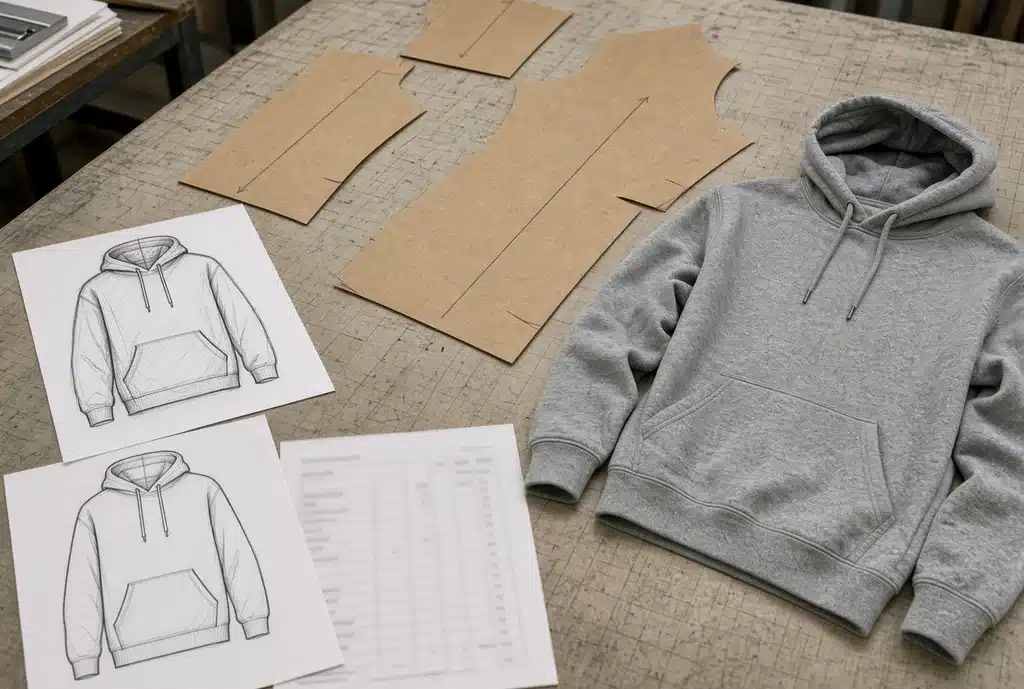
A fashion sketch and technical flat laid with pattern pieces, a measurement spec, and a sample garment on a pattern-room table, showing how a sketch becomes a production-ready garment pattern.
Blog

How to Turn a Fashion Sketch Into a Production-Ready Garment Pattern

Founders, designers, and product developers use this guide when a sketch is ready but the factory still cannot cut. It covers what a sketch can show, then the base size, fit, fabric behavior, finished measurements, and construction notes a pattern maker needs. You will see how those inputs become a first pattern, how comments return to the pattern, and which gaps send development back to the table before sampling.

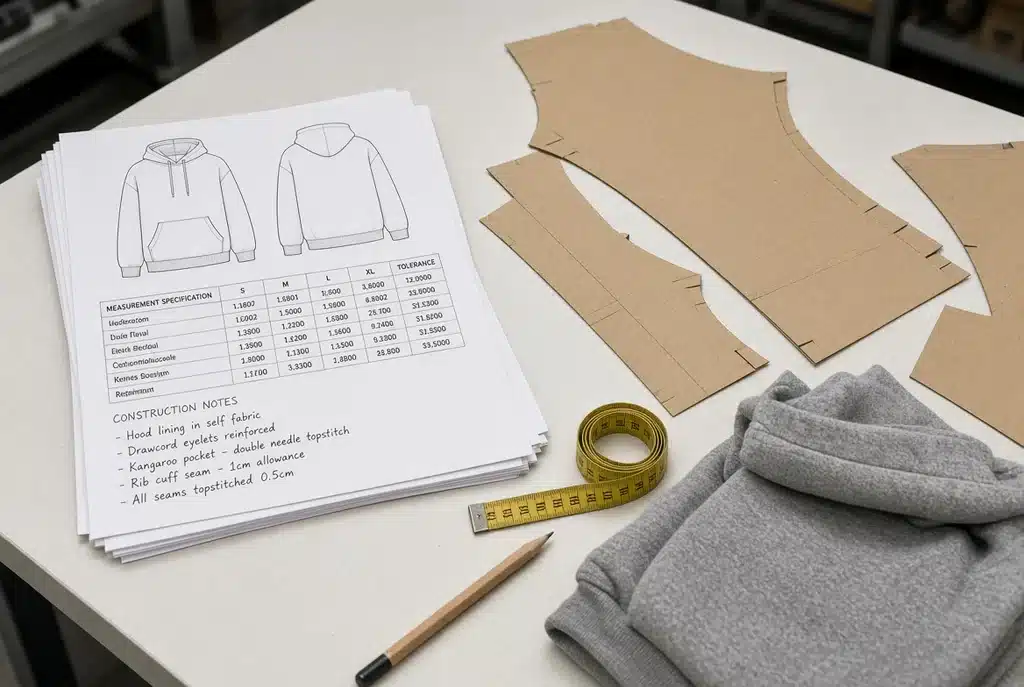
Fashion tech pack showing flats, finished measurements, and construction notes beside garment pattern pieces and a sample on a factory pattern table
Blog

What Is a Fashion Tech Pack, and How Does It Work With a Garment Pattern?

Founders, designers, and sourcing managers use this when a sketch is ready but the factory still cannot cut. It explains what a fashion tech pack is, how it differs from a garment pattern, and which measurements, construction notes, and materials must be named before sampling. You will see how a pattern maker reads the pack and which gaps send the style back.

滚动至顶部