
A clothing sample often costs more per piece than the bulk garment you expect to order later. That gap is why clothing samples cost more: the sample carries pattern work, small-quantity material buying, machine and decoration setup, manual adjustments, and review that bulk production spreads across many units. It is a development job, not one unit pulled early from a production line.
The comparison gets worse when the sample quote includes pattern development and materials, while the bulk figure is only sewing under an already approved spec. A higher sample price is not automatically fair, and a low one is not automatically complete. The useful question is what work the quote actually covers.
Why Clothing Samples Cost More: Bulk and Sampling Use Different Cost Structures
Bulk production is priced on repetition. Once the pattern is approved, the fabric is booked, and a line sews the same sequence, the cost of learning the style has already been spent. Sampling is the other way around. Someone still has to decide the shoulder shape, where a print sits, and whether the rib will recover. That decision work is the clothing sample development cost, and it lands on one garment or a very small set.
A sample room also works differently from a production line. One maker may cut, sew, press, and note problems on the same piece. There is no batch of identical units to average a slow operation across. That is normal for development. It is also why a per-piece sample figure and a per-piece bulk figure are not the same kind of number.
What bulk garment pricing usually assumes
A bulk unit price usually assumes an approved design, a known pattern, confirmed materials, a planned quantity, and a construction method the line can repeat. It may or may not include fabric, print, wash, labels, or packing. Two factories can both say “bulk price” and mean different bundles.
Before you set a sample cost vs bulk garment price, ask what each figure includes and what it leaves out. A sewing-only bulk number next to an all-in sample quote will look unfair even when both numbers are honest. A polo quote that excludes buttons and a woven label is not comparable to a sample quote that includes them. A hoodie bulk price that assumes stock fleece is not comparable to a sample that had to source a custom heather.
What a sample quote may include
A sample quote may cover pattern interpretation or new pattern work, sample-room cutting and sewing, fabric and trim sourcing, decoration setup, finishing, technical comments, and a revision. One-off apparel sample pricing is really a bundle of those jobs, not a miniature version of the bulk sewing price.
A basic polo can still need a collar pattern, a placket decision, and a button spec before the body is sewn. A lined jacket may need shell, lining, and interlining patterns, plus a hardware check, before the first shell is closed. A children’s set may need a smaller pattern block, safer trim choices, and a label position that does not sit on a growth seam. If the quote does not say which of those jobs are inside it, you cannot tell whether the number is high.
Why one garment cannot absorb setup efficiently
Setup does not shrink because you only need one piece. The cutter still lays a short marker. The sample maker still changes feet, tension, and thread. Artwork still has to be placed. Someone still measures the finished garment. On a bulk order those minutes are divided across the run. On a sample they sit on one unit.
A jersey T-shirt shows the gap in a small way. Neck binding, a shoulder seam, and a single chest print still need a setup, but the operations are short. A lined jacket shows it clearly. Pocket bags, lining attachment, zipper setting, and buttonholes are the same jobs whether you sew one or several hundred. Sample setup and material costs stay visible because there is no run to hide them in.
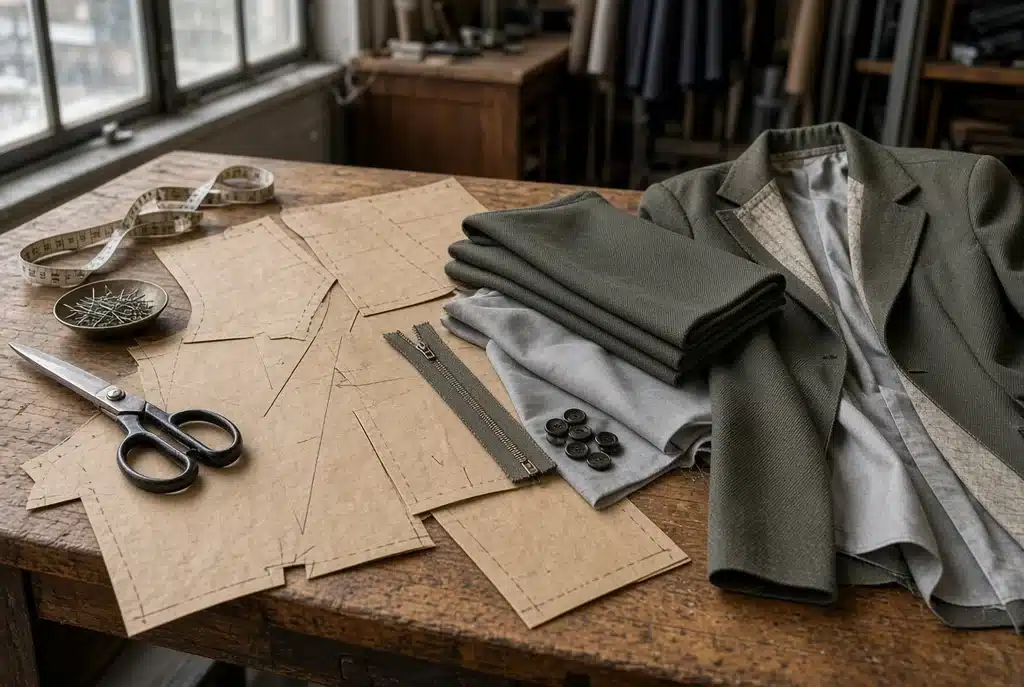
Pattern and Technical Development Add Cost Before Sewing Starts
The costly part often happens before the first cut. How much depends on what you sent, and on how many decisions are still open.
Tech pack versus sketch or reference garment
A complete technical package — flats, a measurement chart, construction notes, and a bill of materials — gives the pattern maker less to invent. A sketch or a reference garment does not. Reverse-engineering a bought shirt means measuring a garment that has already been washed, guessing the original ease, and deciding which details were intentional. That is real work, and it belongs in the sample cost.
A tech pack reduces interpretation. It does not remove pattern making, a sample sew, or a fit check. Brands sometimes expect the pack to zero out development. It will not. A clear pack for a simple loungewear set can still need a pattern and a sew. A thin pack for a tailored shirt can need more interpretation than the sketch suggested.
Pattern changes and fit corrections
Even a simple garment can need a new pattern or a correction after the first fit. A T-shirt shoulder that sits too wide is a pattern change, not a five-minute trim on the sample. Trouser rise that feels low is a front and back adjustment, then usually a new sample if you want a clean reference. Bust shaping on a dress may mean a dart move, a side-seam change, and a check that a stripe or print still matches.
Grading is a separate question. A sample in one size does not prove the size run. If you need a size set to see how the block behaves from small to large, say so at the start. That is additional pattern and sewing work, not a free extra on the first proto. Activewear adds another layer: stretch recovery and a compression fit can look right on the table and wrong on the body, so the correction often comes after a wear test, not only after a flat measurement.
Small-Quantity Materials Make Samples Less Efficient
Fabric and trims bought for one sample rarely price like fabric bought for a cutting order. The cloth may be ordinary. The way it is purchased is not.
Fabric, trims, and minimum purchasing quantities
A mill or a trim house often sells by a cut length, a cone, a bag of buttons, or a zipper chain, not by the exact amount one garment uses. Jersey for a T-shirt, fleece for a hoodie, lining for a jacket, elastic for kids’ shorts, and a short zipper for a polo placket can all arrive in more than the sample needs. The unused balance is part of why sample garments are more expensive on a per-piece basis.
That does not mean the supplier is padding the bill. It means the selling unit and the garment consumption are different. Ask what was bought, what the sample actually used, and what can be kept for a later round or a related style. A spare cone of thread is easy to reuse. A specially dyed lining often is not.
Custom colors, prints, and special materials
Custom dyeing, a lab dip, a printed base cloth, a special finish, a woven label, or branded hardware each add a step before sewing. A substitute can lower the first sample bill. It also limits what the sample can prove.
A black stock fleece hoodie can check hood shape, pocket placement, and rib recovery. It cannot approve a custom heather, a brushed face, or a dyed-to-match drawcord. A dress in nearby poplin can test the silhouette. It cannot approve a custom print that changes drape. Mark the sample for the decisions it is allowed to support, and expect a later round if the final material is different.
Unused material and sourcing effort
Someone still has to find the cloth, check hand and width, receive it, and cut a short marker around flaws. The sample may use a fraction of that purchase. The rest may not fit another style. Sourcing time is part of the sample even when the swatch looks ordinary.
Packaging components follow the same logic. A custom mailer, a printed hangtag, or a branded polybag bought for one review piece can cost more attention than the sewing of a basic tee. If those items are in the sample scope, they belong in the quote conversation. If they are not, do not assume they are free.
Decoration and Finishing Require Their Own Setup
Print, embroidery, wash, and other finishes are not a logo stuck on at the end. Each one can need a file, a setup, a placement check, and a correction.
Printing and embroidery setup
Artwork has to be prepared, placed, and checked against the fabric. A chest print on a hoodie needs scale against the chest panel, and a decision about whether it is applied before or after wash. Embroidery on a lightweight polo needs digitizing, a stitch-density choice, and a backing decision, or the placket area puckers. A patch on a jacket needs placement against a seam or a pocket flap so it does not fight the construction.
Doing any of that once does not make it free. Screen setup, a print file, or a stitch file is the same job for one piece as for the first piece of a run. Bulk can spread that setup. The sample cannot.
Washing, dyeing, and appearance effects
Garment wash, pigment, distressing, brushing, or a softener can move measurements, change hand, and shift color. A basic sweatshirt body becomes a development job once an enzyme wash is added. The sample may need extra handling, a measurement check after wash, and a decision about whether the pattern should be cut larger so the finished garment lands on spec.
A shirt with a light garment dye raises the same issue. The sewing can be standard. The appearance is not. If the sample is meant to approve that look, the finish trial is part of the cost, even when the seam construction is simple.
Why decoration may need approval before bulk
The sample is often the only chance to judge scale, placement, color, edge sharpness, stitch quality, or wash effect before a run. That review is part of the development value, not just the cost of applying a logo once.
Approving a digital file alone does not show how ink sits on fleece, how a small word reads in stitches, or how a wash mutes a print. If the quote excludes a decorated sample, you have not yet approved the decoration. You have only approved a file.
Revisions Turn One Sample Into Multiple Development Activities
The first sample is a test. Cost rises when the test finds a real problem, or when the comments are too vague to sew against.
Minor changes versus major rework
Moving a label, or taking a small amount out of a sleeve length while keeping the cuff width, can be a limited correction. Changing the fabric, redrawing the pattern, adding a lining, switching a set-in sleeve to a raglan, or replacing embroidery with a print is a new development cycle.
There is no standard number of revisions inside every quote. A factory may include a small correction and treat a new block as another sample. Ask what the quoted sample covers, and what a second round includes, before you compare two offers. One may look cheaper because the revision is excluded.
How unclear feedback increases expense
“The sleeve looks wrong” sends the sample room in two directions. “Reduce sleeve length by the amount marked on the sample, and keep cuff width unchanged” can be sewn against. Conflicting notes make it worse. A designer wants a closer shoulder. A buyer wants more ease. The sample room builds a third version that neither person asked for by name.
One decision owner and one comment file cut that loop. They do not remove a real correction. They stop the sample from being rebuilt twice for the same unresolved point. Version labels help: “proto 2, size M, stock fleece, print pending” tells the next reviewer what this piece is allowed to prove.
When rebuilding is safer than patching
A major fit or material change is often cleaner as a new sample than as a recut of the old one. Opening a lined jacket to swap the lining, or recutting a washed garment that has already shrunk, can cost as much as starting again and leave you with a weak reference. Paying for a rebuild can be the safer path if the alternative is a patched sample nobody trusts in bulk.
That choice should be explicit. Patching a measurement on an already washed hoodie may hide the fact that the pattern still needs to change. A new sample in the intended fabric, sewn to the corrected pattern, is the reference bulk should follow.
How to Judge Whether a Sample Quote Is Reasonable
A higher number is not proof of care. A lower number is not proof of value. Scope is the test. Comparing sample and bulk clothing quotes only works after both sides describe the same job.
Ask what is included
Ask, in writing, whether the quote includes each of these:
- Pattern development, or only an adjustment to a pattern you already supplied.
- Fabric and trims, and whether they are stock, substitute, or the intended bulk quality.
- Cutting and sewing, and in which size and quantity.
- Printing, embroidery, washing, or other finishing.
- Labels and other branding.
- What a revision or a re-sample includes, and what starts a new charge.
- Packing and shipping of the sample.
- Materials or services that are excluded.
A quote that lists those lines is easier to judge than a single figure with no scope. If a line is excluded, the sample cannot approve it.
Compare sample quotes with the same assumptions
Two sample quotes should use the same garment specification, materials, size, decoration, finish, and service list before you rank them. An all-in development sample against a bulk sewing price will not tell you who is expensive. It tells you the two numbers are answering different questions.
The same trap appears between sample quotes. One factory prices a tee in stock jersey with no print. Another prices the same sketch in your intended cloth with a chest print and a woven label. The second number can be higher and still be the closer match to the garment you plan to sell.
Ask what could change the quoted amount
Fabric substitution, an artwork revision, an extra size, a new construction detail, a custom trim, or another sample round can move the figure. You are not asking for a promise that the first number is frozen. You are asking which changes reopen it.
That is how you read a sample quote without treating the first email as a contract. A transparent scope still leaves room for a real change. An unexplained single price does not.

How Brands Can Reduce Avoidable Sample Cost
You can cut waste. You should not cut the checks that stop a bad bulk order. Reducing clothing sample costs means fewer avoidable rounds, not a skipped fit or a skipped material approval.
Improve the information sent at the beginning
A clear sketch, a measurement target, fabric direction, artwork at the intended scale, trim notes, and one sentence on what this sample must decide will reduce guesswork. That is the practical saving. A full tech pack helps. It does not guarantee the lowest quote, because the garment can still be complex.
Say what is fixed and what is still open. “Copy this hood shape; pocket style is optional” is more useful than a folder of references with no priority. The sample room should not have to guess which photo is the product.
Separate feasibility sampling from final-material sampling
Stock jersey can prove a T-shirt body. It cannot approve a custom stripe. A nearby woven can test a shirt collar. It cannot approve a dyed-to-match button or a special finish. Say which sample is a construction check and which one must be in the bulk cloth.
Using a substitute early is reasonable if everyone knows what it cannot sign off. Treating that substitute sample as bulk approval is how a later material change becomes a surprise bill.
Control optional details during early development
Lock silhouette and construction before you add three embroidery placements, two washes, and a custom aglet. A kids’ set with a print, a woven label, and a special button can wait on the button until the block fits. Optional detail is where early sample bills grow without teaching you much.
The same rule fits a jacket. Prove the body, sleeve, and lining attachment before you sample four hardware finishes. Prove the trouser rise and seat before you add a branded coin pocket. Each extra detail can be right. It does not all have to be right on sample one.
Consolidate revision feedback
One review owner, one comment document, and a version name on the sample stop contradictory edits. Send the comments once, after the fit, not as a chain of messages that each add a new change. Measurable notes travel further than taste notes. “Shorten the body by the marked amount and keep the hem rib height” can be costed. “Make it more premium” cannot.
Frequently Asked Questions
Why do clothing samples cost more than bulk garments?
Because the sample carries development that bulk spreads out: pattern work, small-lot materials, setup, decoration or finish trials, review, and often a correction. Bulk pricing usually assumes that work is already done and can be repeated.
Is a sample price the same as the bulk garment price?
No. A sample price is a development charge for a small quantity. A bulk price is repetitive production under an approved spec. They match only if both include the same work, which they usually do not.
Does a tech pack make a sample cheaper?
It can reduce interpretation and rework. It does not remove pattern making, sewing, materials, or decoration setup. A pack for a lined, washed jacket will still cost more to sample than a pack for a basic tee.
Why do custom fabrics and trims increase sample cost?
They add sourcing, a selling-unit purchase, and sometimes a lab dip, a custom dye, or a trim that cannot be pulled from stock. A substitute may lower the first bill and also limit what you can approve.
Do revisions always require paying for another sample?
Not always. A small, clear correction may be handled on the existing sample or inside an agreed revision. A new fabric, a new pattern, or a new decoration often means another sample. Ask what the quote includes before you assume either way.
How should I compare clothing sample quotes?
Match the garment, the materials, the size, the decoration, the finish, and the list of included services. Then ask what would change the number. Ignore a comparison that sets an all-in sample against a sewing-only bulk price.