
Pattern grading in fashion is the process of scaling an approved base size into the other sizes in a run while keeping the original shape and proportions. If you have been asking what is pattern grading, the short answer is this: pattern making builds the base shape; grading only enlarges or shrinks that shape. It does not redesign the garment, and it does not repair a fit that is already wrong.
A weak grade shows up as inconsistent fit across sizes. Sleeves stop matching armholes. A waist that felt right in the sample feels tight in one size and loose in the next. Brands sometimes hope grading will tidy a gaping neckline or a twisted side seam. It will not. Grading multiplies the base. Whatever the approved size does, the rest of the run will do too.
What Pattern Grading Actually Does
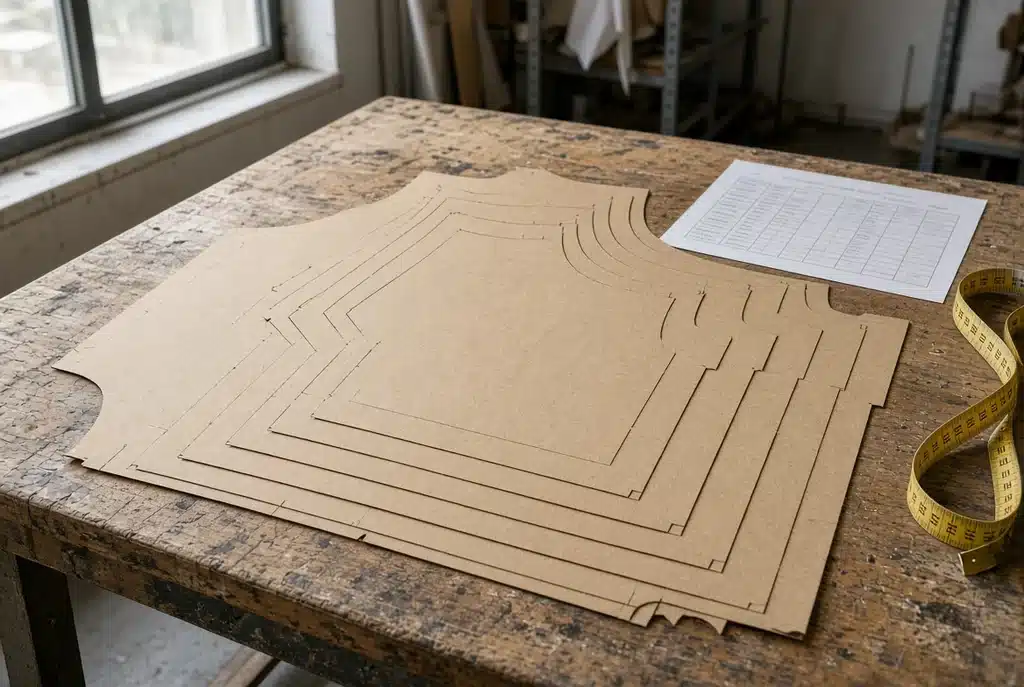
What is pattern grading on a cutting table is simpler than the term sounds. It is a systematic way to turn one approved size into a full size range, so the cutter is not redrawing every size by eye. The pattern pieces stay recognizable. A medium hoodie front is still that hoodie front in small and in extra-large. Only the dimensions step.
That is also why grading is not pattern making, not an alteration, and not a fit correction. Those three jobs get mixed up in briefs all the time, usually in the same sentence: “Can you just grade it and fix the neck while you are in there?”
Grading vs Pattern Making vs Alteration
Pattern making creates the first approved shape. The pattern maker drafts or traces the base, builds the seam allowances, sets the armhole, places the pocket, and balances the side seams. A sample is cut from that pattern, sewn, tried, and commented on. Until that base is accepted, there is nothing honest to scale.
Grading takes that locked shape and applies grade rules so each next size grows or shrinks by an agreed amount. The silhouette, the seam logic, and the detail placement stay in the same family. A brand that asks for a new collar, a dropped shoulder, or a different pocket during the grade is asking for a new pattern, not a size run.
Alteration is a different job again. It changes a garment on a body or on one sample: take in a side seam, shorten a sleeve, lift a shoulder. Those changes belong to that piece. They do not automatically become the rule for every size. If a fitter pins the base sample and the pattern is never updated, the grade will still be built on the old shape.
The practical test is easy. If the base size still gapes at the neck or twists at the side seam, do not grade it. Fix the base, sew another sample if the change is visible in cloth, and only then start the size run. Grading a bad base is how one fitting problem becomes six.
Base Size, Grade Rules, and Size Spec
Three things have to exist before a grade is more than a guess.
The base size is the size that was fitted and approved. It is not always a medium, and it should not be assumed. A kidswear line, a plus range, or a tailored shirt program may sit on a different base. Name it.
Grade rules say how much each measurement changes from one size to the next, and where on the pattern that change is applied. Chest growth is not the same decision as sleeve growth. A rule that only blows the side seams and ignores the armhole will eventually make a sleeve that does not fit the hole it is supposed to set into.
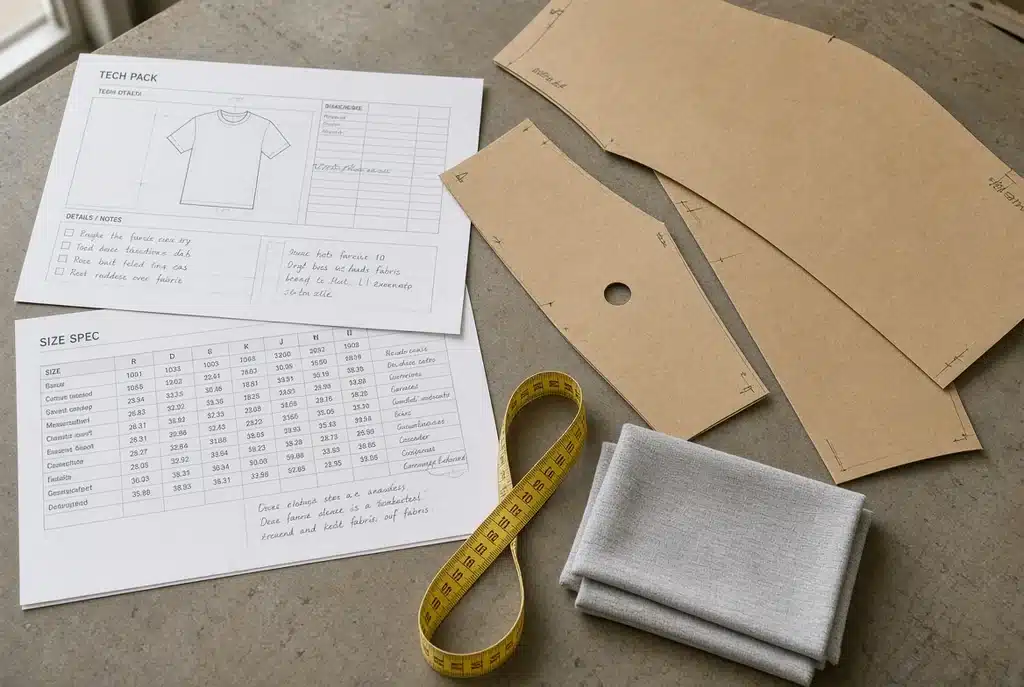
The size spec is the written list of finished measurements for each size. A grade without a size spec for clothing brands is a stack of nested pieces with no target. The pattern room can make the pieces look orderly and still miss the chest, length, or rise the brand actually sells.
How Grading Moves Measurements Across Sizes
Garment pattern grading is proportional scaling. The pattern maker is not inventing a new garment at each size. The shape stays. The numbers move.
Proportional Scaling, Not Redesign
Seam positions and detail placements move with the panel they sit on. On a hoodie, the kangaroo pocket should travel with the front, not stay pinned to the medium coordinates while the body grows around it. On a shirt, a chest pocket shifts with the front width so it still sits in the same visual place. On trousers, the pocket opening follows the side seam rather than floating at a fixed distance from an old hip line.
If someone moves the pocket “because large sizes need it lower” without writing that as a design decision, the grade has stopped being a grade. That is a redesign, and it needs its own sample. How to grade a garment pattern starts with protecting the approved shape, then applying the agreed steps. It does not start with improving the style size by size.
Where Measurements Change and Where They Do Not
Most body measurements grade: chest, waist, hip, body length, sleeve length, shoulder, thigh, rise. Some details stay fixed or move only a little. A neck width on a tee may open less than the chest. A rib cuff width, a collar stand height, a button diameter, or a drawcord channel often should not grow just because the body did. Trim that grades by accident is a common reason a large size looks clumsy and a small size looks choked.
The right logic depends on the garment and the customer. A boxy streetwear tee, a fitted polo, and a workwear overshirt can share a fabric and still need different steps. A dress may need more movement through the hip than through the bust. Kidswear grades are not adult grades with the numbers halved. None of that can be copied from a generic chart and dropped onto a style the brand has not measured.
There is no universal grade worth publishing here. A “standard” two-size step that ignores the spec will still miss the garment.
Digital Grading and File Control
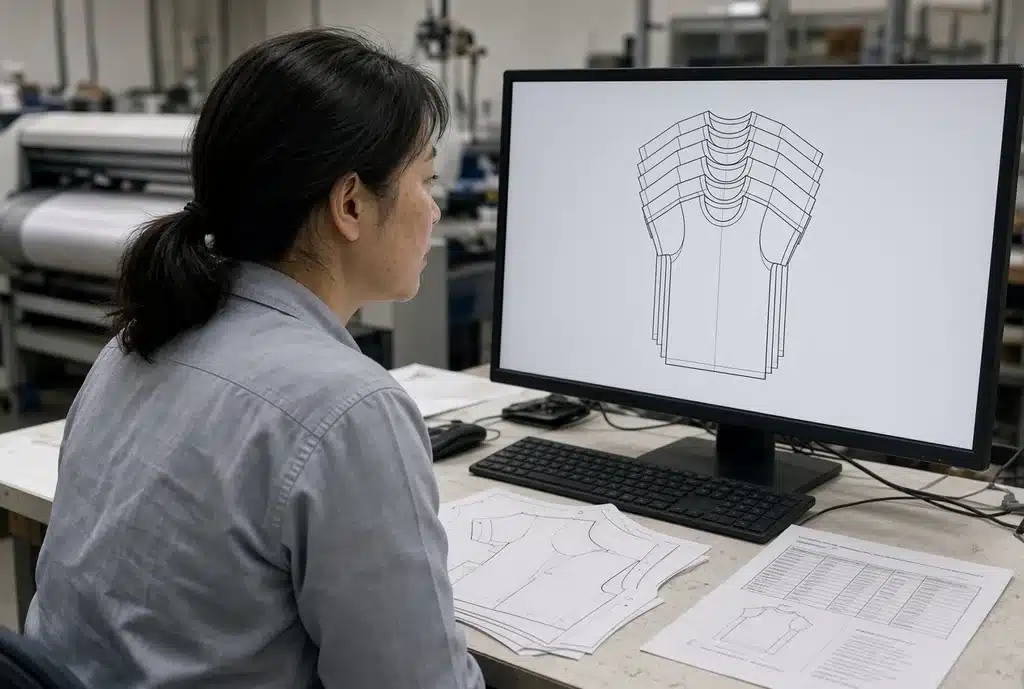
Most grades now live in a digital file: each size named, each rule recorded, each piece able to be checked against the spec and plotted. That is useful because a grade you cannot reopen is a grade you cannot audit. It is not useful because a screen is automatically more accurate than a paper nest. A wrong rule plotted cleanly is still a wrong rule.
What matters in the file is dull and practical. Size names should match the spec, not a private code only one pattern maker understands. The version that was approved should be the version that gets plotted. If a shoulder point moves after approval, the file name and the date should say so. Before bulk, someone still has to check that the plotted pieces match the finished measurements, including seam allowance, and that left and right pieces mirror. Digital grading does not remove that check. It only makes the check possible.
From Approved Base to Graded Size Run
Grading before bulk production starts after the base pattern and the base sample are approved. It ends when the size run has been checked against the spec and is cleared for cutting. Skipping either end is how a style looks finished in a line sheet and fails in the warehouse.
Checking the Base Before Grading
A paper pattern can be measured. Fit still shows up in cloth. A useful base check names points, not moods. Neckline gaping, shoulder slope, armhole depth, body length, pocket height, and stitch bulk at the side seam are comments a pattern maker can act on. “Feels a bit off” is not.
Those comments have to be closed before grading starts. If the armhole is deep on the medium, grading will carry a deep armhole into the other sizes, sometimes worse, because the sleeve grade and the armhole grade no longer share the same curve. Brands sometimes grade first and hope the problems will average out. They do not average out. They separate. One size looks acceptable, the next pulls, and the sleeve cap no longer eases in.
Sew the correction in the base fabric, or in a clearly marked substitute if the bulk cloth is late. Then measure the corrected sample against the spec before anyone nests the run.
Locking the Grade at Approval
An approved grade should mean four things are on the record: the graded patterns, the size spec those patterns were built to, the measurement checks that were done, and the tolerances the brand accepts on key points. Tolerance here is not a slogan. It is the agreed amount a chest, length, or waist may vary and still be that size. It belongs to the style. Copying a tolerance from another category, or from a blank program, is how a “pass” still feels wrong on the body.
If the fabric, the wash, or the construction changes after that approval, the grade is no longer proven. A heavier fleece, a different rib, or a garment dye can move finished measurements even when the pattern file did not change. Approval of a grade does not mean every bulk unit will match the sample. Cutting, sewing, shrinkage, and handling still sit between the nest and the packed carton. The approval only means the size run was checked against a known spec before those variables started.

Decisions That Change the Grade Before Anyone Cuts Bulk
A grade cannot invent the customer, the size spec, or the way the cloth will behave. Those choices move the actual pieces. Leaving them open and asking the pattern room to “use a normal grade” only hides the decision inside someone else’s habit.
Fabric Behavior and Grade Expectations
Stretch, drape, weight, and shrinkage are reasons the same grade can fit differently in two cloths. A stable woven shirt and a stretch jersey tee can share a chest number and still feel nothing alike, because one has mechanical ease and the other has recovery. A French terry hoodie that shrinks in length after wash will miss the spec if the grade was proven only on an unwashed proto.
If the bulk fabric is not the sample fabric, treat the grade as unproven. That is not a refusal to proceed. It is a flag. The size run can be drafted, but it should be checked again in the cloth and wash that will actually be cut. Hand feel matters here too. A stiff canvas and a fluid rayon can carry the same hip grade and read as two different fits once they hang.
Size Spec and Target Customer Have to Be Named
Body size and finished garment size are not the same number. A customer who wears a medium in one brand may need a different chest in yours, depending on ease. The size spec has to state finished measurements for each size, not a range written as “S–XL” with no chest, length, or sleeve.
“Regular fit” does not specify anything until those points are written. A regular tee for one label is a close jersey with a short body. For another it is a wider chest and a longer hem. Both can be correct. Neither can be graded from the adjective. Write the base size, the full size list, and the finished measurements the brand intends to sell. Notes on who wears it — narrow shoulder, longer torso, workwear layering, kids age band — tell the pattern maker which points are allowed to move and which must stay put.
Common Mistakes That Send the Grade Back to the Table
Most grades that come back were not failed by the software or the plotter. They were started from a brief that was not ready.
Grading Before the Base Fit Is Locked
The usual pressure is a line sheet. Sizes are promised, the sales meeting is dated, and the base still has a pulling armhole or a neck that stands off the body. Grading at that point feels like progress. It is a way to multiply an open fit comment.
Typical symptoms are uneven. Some sizes feel fine because they sit close to the sample. Others feel tight through the chest or loose through the waist. Armholes and sleeves stop matching because the base curve was never balanced. The fix is slower and cheaper than re-nesting a whole run: lock the base, confirm it in cloth, then grade.
Using a Generic Grade Without a Size Spec
Pattern grading vs pattern making is often lost here. The pattern may already be sound, and the grade may be cleanly executed, and the size run can still be wrong if nobody wrote the target. A generic grade applies someone else’s steps. Those steps may jump too far at the waist, hold the sleeve still while the armhole grows, or keep length almost flat when the customer is taller in the larger sizes.
Always grade against a written spec. If a measurement is allowed to stay the same across sizes, say so. Silence is not a rule. It is an invitation for the pattern room and the brand to assume two different things.
Ignoring Fabric and Wash in the Grade
A grade that looks right on paper can miss in bulk once the cloth shrinks, relaxes, or stretches in wear. Enzyme wash, garment dye, and a heavy rinse move length and width. A rib hem with poor recovery makes a size that measured correctly on the table feel small after the first wash. Include the bulk fabric and the wash in the grade check, or mark the grade as pending those inputs. Hoping the sewing line will “ease it in” is how a spec and a carton drift apart.
What a Brand Should Have Ready Before Grading Starts
A pattern maker can grade from a thin brief. The result will be a thin grade. The list below is the pre-flight that cuts the loop.
A Clear Size Spec Beats a Vague Size Range
Have these on one sheet before you ask for the size run:
- The base size, named, and confirmation that the base sample is approved or a list of open fit points that must close first.
- The size range, written as actual sizes, not “the usual.”
- Key finished measurements per size: at least chest or bust, waist, hip where it matters, body length, sleeve length, and any point the brand has already argued about in fitting.
- Who the garment is for, in one or two lines, including fit priorities such as more room at the hip or a shorter body.
- Fabric direction, or the confirmed fabric, including stretch and whether the grade must survive a wash.
That sheet is the size spec. A range with no numbers is a conversation, not a grading instruction.
Marking Open Decisions Clearly
Some inputs are often still open when a grade is requested: exact fabric weight, wash recipe, rib type, trim width, pocket size. Mark them as open. A pattern maker who knows the hip grade may change after a heavier cloth arrives will not treat that line as final. A pattern maker who was not told will.
Put the flags in the tech pack or the grading brief, next to the measurement they affect. “Wash TBD — length grade provisional” is more useful than a footnote that says details to follow. When the decision lands, the grade is revised at that point only, instead of being reopened as if the whole run had failed.
Summary Guidance – Treating Grading as a System
A clean size run is not a single clever grade. It is a short system: an approved base, a written size spec, grade rules that match that spec, a check in the fabric and wash you will actually cut, and a record of what was approved. Break any one of those and the others cannot save it.
Pattern making decides the shape. Grading only carries that shape across sizes. If the base twists, gapes, or pulls, fix it before the nest exists. If the spec is still a size range with no finished measurements, there is nothing to grade against. If the bulk cloth is not the sample cloth, the grade is a draft until it is checked again.
Keep the notes from each style. Which point moved, which wash changed the length, which size the customer actually bought. The next grade gets quieter when those lessons stay on the sheet instead of living in one fitting.