
Clothing samples vary according to the production questions. A prototype determines if the design and construction is sewable or not. A fit sample indicates if measurements, balance and wearability conform to the desired block. The pre-production sample lets you know if the approved version is ready to be produced in large quantities using the branding and materials you want to use. If multiple sizes are going out, a size set might be necessary. A sales or photo sample is created for presentation purposes only, and not as an alternative to technical approval.
If it’s an attractive outfit, it doesn’t imply all risks are mitigated. That sample can have substitute fabric, unfinished labels, one size or temporary decoration. View sample name as a label rather than a guarantee. What is important is the purpose, the contents of the box, the comments on it, and who buyer and factory agree in writing to designate as controlling which sample.
What Clothing Sample Types Are and Why They Matter
A clothing sample is a tangible mock-up of an article of clothing, as a result of which the design, construction, materials, fit, appearance, branding, or readiness for production can be tested before mass production. It is there because it allows problems to be identified before the pattern, fabric and comments are changed without having to cut a whole order.
The first area where factory problems appear is here – a sleeve that twists after sewing, a collar that will not sit, unexpected shrinkage after wash, a fabric substitution that changes the drape, embroidery that pulls the shoulder, a woven label that sits too high at the neck or a size run that loses shape after grading. It is more cost effective to be able to catch those points on a sample rather than finding them in finished cartons.
Sample Approval Is a Series of Decisions, Not One Yes-or-No Event
Various stages will capture different things. Design approval is a confirmation of the silhouette and construction concept. Seams, components and methods are confirmed by construction approval. Fit approval – in-service measurement and wear. Fabric and colour approval and handfeel. Decoration approval is for print, embroidery, wash or patch. Pre-production approval means that the version that is to be copied in bulk is approved.
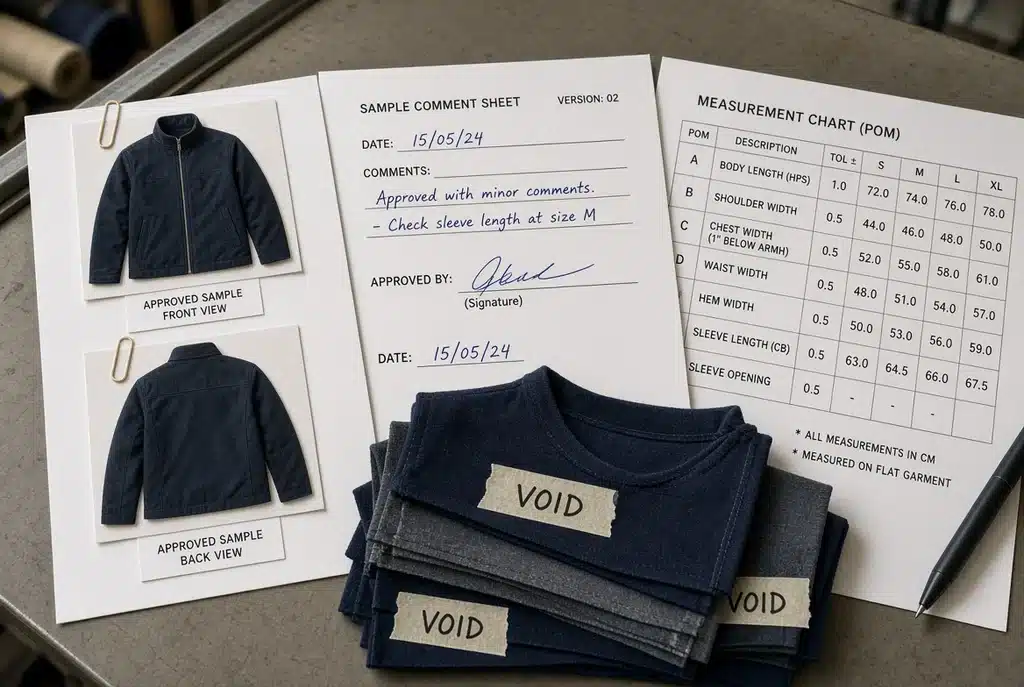
Make comments on a measurement point, component or process. “Make it better” sends the factory in a quandary. The Body length 71 cm on size M, Target 73 cm, Keep sleeve length can be performed.
What a Sample Can and Cannot Prove
A sample can only be used to demonstrate what is contained in the sample garment. It cannot automatically quality an untested size, other colors, a later fabric lot, packing method or bulk consistency.
An M T-shirt may be used for a players oversized block and pocket. It does not imply the same size shrinkage of the custom dyed 220 GSM fabric or the same ratio after it is graded to XL. Document tested and untested.

Prototype Sample: Confirm the Design and Basic Construction
The initial physical manifestation of a sketch, reference garment or tech pack is a prototype sample. It frequently begins prior to complete lockup of fabric, trims, and brandings. The task is to determine if the concept works and if the silhouette makes sense.
What the Prototype Sample Is Used to Check
Examine silhouette, whole proportions, panel layout, basic structure and principal parts. Discuss whether the product concept is technically feasible.
The sewn hoodie hood might appear right on the paper and come undone after being sewed. The placket on the shirt can open up. The amount of flare on the hips of a fitted dress may be more or less than indicated on the sketch. If the chest ease is real, then a jacket pocket may be too high. This is when the design elements that are not sewable are spotted or those that are not “sewing” the desired look.
What the Prototype May Not Represent
The first sample can be a substitute fabric, available rib/binding, temporary decoration labels, or incomplete decoration, so that development can proceed. That is common. It’s also why a prototype is not a representation of a final fit or production standard until the factory has verified that the materials and construction are final.
If a startup approves a blank hoodie prototype and intends to add embroidery to it as well as a woven neck label down the road, they’re approving construction. Fit, comfort at neck and placement of decorations are open.
Prototype Review Checklist
Work through:
- General outline (background).
- Main construction: seams, closures, hood, placket, waistband and hem.
- Body proportion and body style lines.
- Position of pockets, openings and closures.
- Basic stretch and recovery of this sample only.
- Key features which should withstand the sewing process.
- The factory flags are the concern of feasibility.
- Changes needed for a fit sample.
Distinguish necessary from optional changes. If a pocket moves 1cm when hitting a construction line, it must be moved. Don’t change shape of pockets just because another color might look nicer.

Fit Sample: Confirm Measurements, Balance, and Wearability
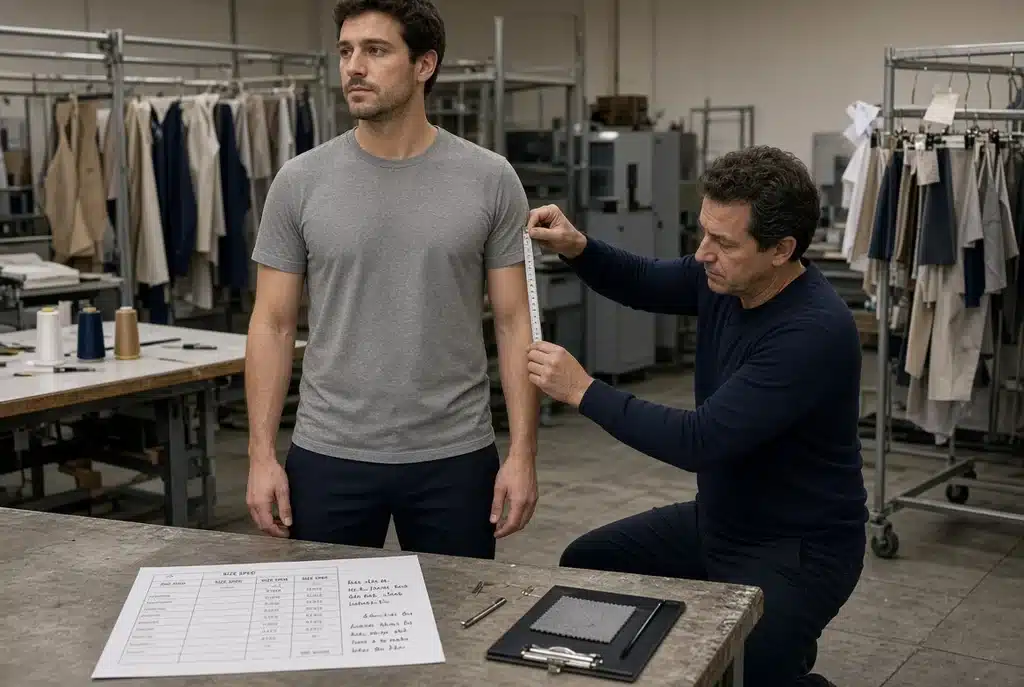
A fit sample is a garment created in the apparel industry to test how the garment will fit a person’s body shape and if the measurements, ease and balance will correspond to the desired fit. Building might have already been nearing completion. Now only the wearability of the product is debated.
What to Review on a Fit Sample
For the garment, measure the points for chest/bust, waist, hip, shoulder, sleeve length, body length, rise, neck opening, armhole, crotch balance, ease, body length, drape, and symmetrical design (left to right).
Not all POMs are applicable to all styles. Unlike a tailored waist, a relaxed oversized T-shirt requires chest drop, shoulder drop, body length, sleeve opening and neck drop. A fitted dress requires bust, waist, hip and back balance and/or princess-line. Check the garment against the intended fit model, against a reference garment or against the size specification and not against a general idea of “looking good.”
Fit Comments Must Be Measurable
You can’t always make things looser and shorten the sleeve a little. Document Affected POM, Current Measurement, Required Measurement, Tolerance, and brief wear note.
Example: If the hoodie feels short in the body and long in the sleeve, it cannot be “made smaller” – it is written as “make the hoodie smaller” Record: “size M body length 68 cm, target 71 cm; sleeve from CB (neck) 87 cm, target 84 cm; keep chest. The two changes are in opposite directions. Putting them all in a single comment makes a new problem.
Fit Sample Limitations
It is possible to use substitute fabric, temporary trims or just one size in a fit sample. Fit changes may occur after wash due to final fabric stretch, weight, shrinkage and drape. At this point the features that are allowed and the ones that are allowed for material review or size set are recorded.
If the fit sample for a stretch activewear short is made in a different elastane content than bulk, please approve shape with a note on the comment sheet stating that this sample was made in a different elastane content than bulk.
Size Set: Check Grading Across the Size Range
A size set sample for clothing is a few sizes created from the approved base pattern. It validates the behavior of that pattern over the desired range. No single approved medium is able to verify the entire run.
When a Size Set Is Worth Requesting
Ask for a size set if tolerance is tight, the garment is tailored or fitted, the fabric has stretch, there are children’s sizes, the sleeve or rise is of an unusual design, or if the brand has many sizes in the production run and needs to be produced again.
This is because a relaxed t-shirt of adult sizes perhaps doesn’t require the same size-set work as an article of a fitted dress or even five size hoodie program. The decision should be based on product risk, not habit.
What to Check Across Sizes
Check for uniformity of body length, width, sleeve proportion, neckline and armhole, waistband and rise, pocket location, print location, and silhouette. The design intent should be maintained when grading. If all measurements are increased by the same amount then the garment may become distorted.
With a T-shirt that is large enough in M, it can turn into a wide short box in XXL if length doesn’t go with width. If the grade doesn’t account for body shape the dress that fits at the waist in S will pull across the hip in L.
Common Grading Problems
Common problems are sleeves that grow too large or the neck openings that get too tight, pockets that wander from the planned line, rise which feels uncomfortable, prints that move too high or too low, and increased sizes that lose its shape.
You can’t find a single grading formula that works for all categories. The grade rules are based on the type of garment, fit direction, fabric character and the desired size band.

Sales Sample and Photo Sample: Confirm Presentation, Not All Production Risk
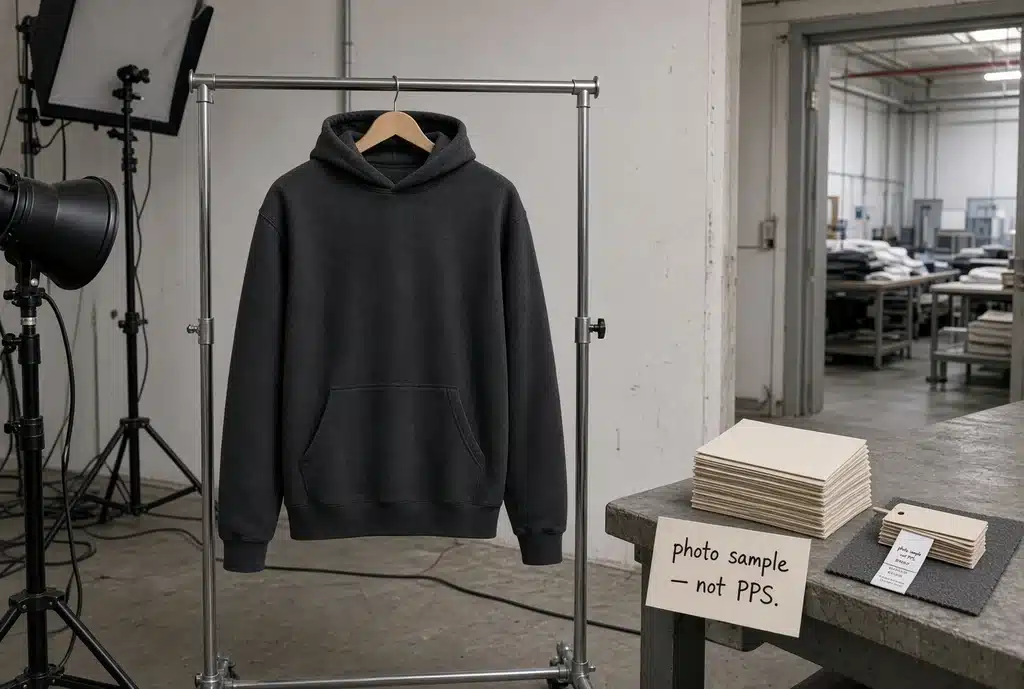
Sales samples and photo samples are used to present the product to a customer or potential customer, a retailer, or the marketing department. They matter commercially. They may not be the final product standard.
When Sales or Photo Samples Are Used
They can be seen in showroom appointments, wholesale selling, ecommerce photography, campaign shoots, pre-order marketing, and retailer presentations. Often these samples are locked before every detail of the bulk materials or production is processed, with a commercial calendar forcing the process.
Why a Sales Sample Should Not Replace a Pre-Production Sample
Substitute fabric, a temporary label, hand finished embroidery or individually adjusted construction may be used in a photo sample. It can look great and yet it can be a bad bulk reference.
Verify, in writing, that the sales sample is acceptable for bulk, or if it is not, a pre-production sample may be necessary. Bulk fleece, rib and thread colour, packing are not authorised by a lookbook hoodie shot on a model.
Pre-Production Sample: Confirm the Bulk Version Before Manufacturing
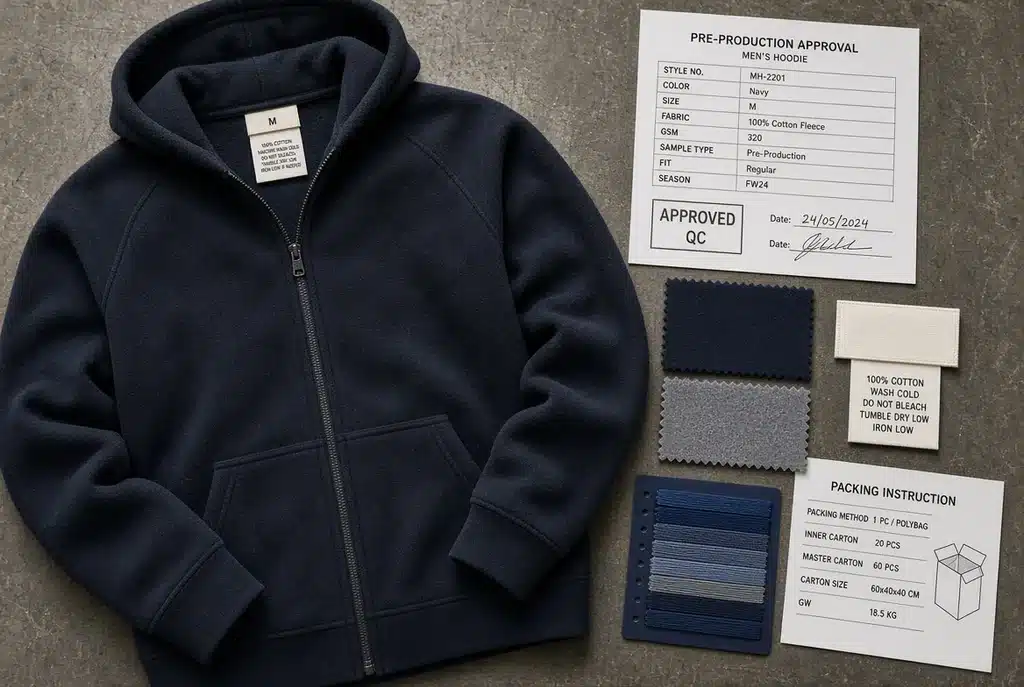
Pre-production sample clothing gate is the final technical gate prior to bulk cutting. It should be the same brand and materials used in the actual garment with the same trims, decoration, construction and packing instructions as approved.
What a Pre-Production Sample Should Include
Agree the contents with the factory based on the product and order:
- A certified fabric or equivalent.
- Final colour or an approved colour standard.
- Final trims & hardware.
- Real care labels and main labels.
- Appropriate patch, print or embroidery.
- Final construction methods.
- Confirmed measurements.
- Appropriate cleaning or finishing.
- Packing instructions where packing will impact fold, clip and presentation.
If the embroidery is still a paper placement and the label is a sticker, the hoodie with custom fleece, rib, embroidery and woven label is not a pre-production sample.
What to Check Before Approving the Pre-Production Sample
Use a Clothing Sample Approval Checklist including appearance, measurements and workmanship, fabric, colour, decoration, labels, packaging and comparison of approved comments (line by line).
Approval should be in writing and linked to a sample version/dated. List outstanding issues. Never leave exceptions in a chat thread!
What Happens If the Pre-Production Sample Is Not Approved
Never to launch bulk when a material, fit, construction and/or decoration or branding issue is still on. There are some practical options: such as revising the sample, documenting an approved deviation, substituting a material with written sign-off, and adjusting the production plan. Not all issues need to be addressed by re-developing from the very first prototype.
How Sample Types Fit Into a Typical Development Sequence
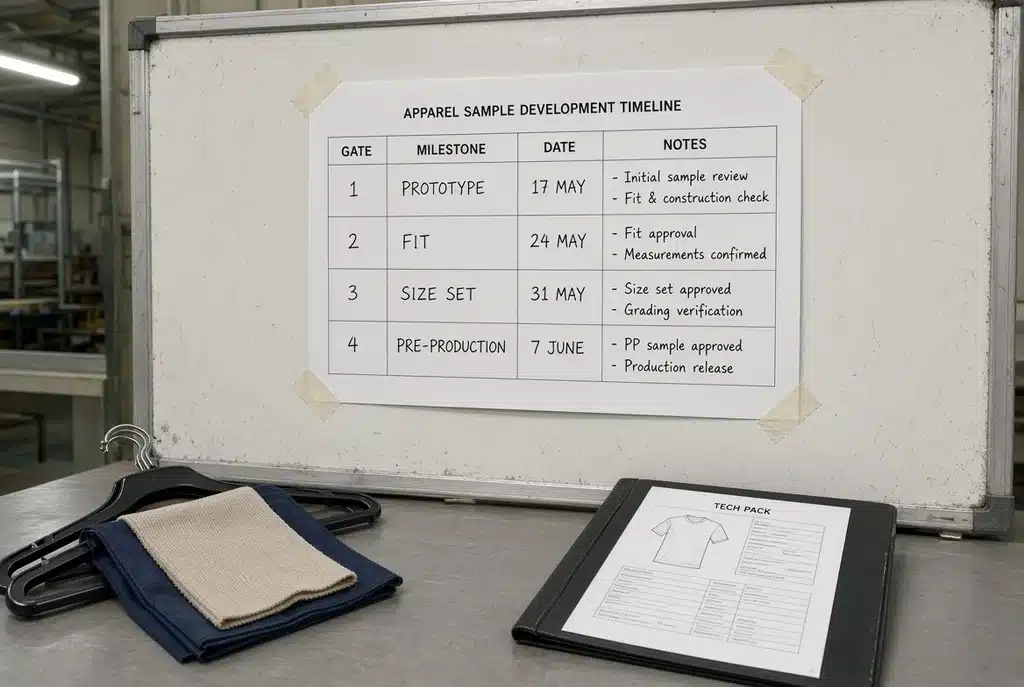
In general, the types of sampling in garment manufacturing enhance each other. All of the types are not used in every order. Sequences are based on the order of complexity of garments, documentation quality, risk of materials and number of changes by the buyer.
New Design or Complex Garment Sequence
The route around a new or complex style that will function:
- Prototype sample.
- Install sample and revisions.
- Size set upon the risk of range or fit.
- Decoration or Branding Sample if not already locked with print, embroidery, wash or labels.
- Pre-production sample.
- Testing in bulk and inspection.
Based on the complexity of the garment, the level of detail in the Tech Pack, availability of materials and changes made by the buyer. The fitted dress is like a jersey tee with multiple fittings.
Existing Running Style or Simpler Private Label Sequence
One approach to a running style may be to review the existing sample, approve the branding, confirm materials, confirm pre-production, and then cut bulk. But, shorter doesn’t mean no checks. The buyer is still required to verify the actual garment, branding, material, measurement and packing.
When Additional Samples Are Needed
An additional sample is warranted if a change occurs in fabric, colour, wash, decoration, labels, construction, size range or packaging after an initial approval. Consider each of those changes to be a new approval danger. Do not assume that the original sample is still valid.
Common Sample Approval Mistakes and How to Prevent Them
Most expensive sample mistakes relate to using a single garment to address the wrong question, or to not documenting the approved version.
Approving the Wrong Sample for the Decision
Approving a prototype for fit, a fit sample for final branding, or a photo sample for bulk production mixes gates. Write the purpose on the comment sheet: design approval, fit approval, material approval, branding approval, or pre-production approval.
Approving a Sample Made With Substitute Materials
Gates are raised when a prototype is approved for fit, a fit sample is approved for final branding or a photo sample is approved for bulk production. Document the purpose on the comment sheet: Design Approval, Fit Approval, Material Approval, Branding Approval, or Pre-production Approval.
Adding Labels, Decoration, or Packaging After Sample Approval
The result may vary due to change in fabric weight, stretch, shrinkage, drape, color, and handfeel. Record every substitute. Specify confirmation of the final material with bulk. Substitute-fabric sample should NOT be the bulk reference without notice.
Giving Vague Fit Comments
Woven labels, embroidery, patches, wash effects, hang tags and packaging change fit, appearance, comfort, labor and packing. Ensure that the sample to be locked bulk contains brand critical materials.
Failing to Record the Approved Version
There is no identifiable reference to several samples and some scattered messages. Note the date, version, measurements, materials, artwork, comments, approvals, and exceptions that may still exist for the sample. It’s not the last photo in a chat it’s a production reference.
Approve Each Sample for Its Intended Purpose
Prototype – a model to test the design; determine if it can be produced. A fit sample will verify measurement and wearability. A set of sizes is used to grade. We can show you how to present your product to the market through a sales sample. Pre Production Sample is a sample that is checked for the version to be considered for the bulk. The apparel sample development process is in operation only if all those questions are answered intentionally.
For every sample approved, record the purpose of the sample, the materials or brands included, what is not known, and whether the sample is approved for use as the bulk sample. Approvability of samples should only be in addition to production controls and inspection. A single signed garment does not ensure a perfect bulk order!