Contact Us

作者姓名:Lady

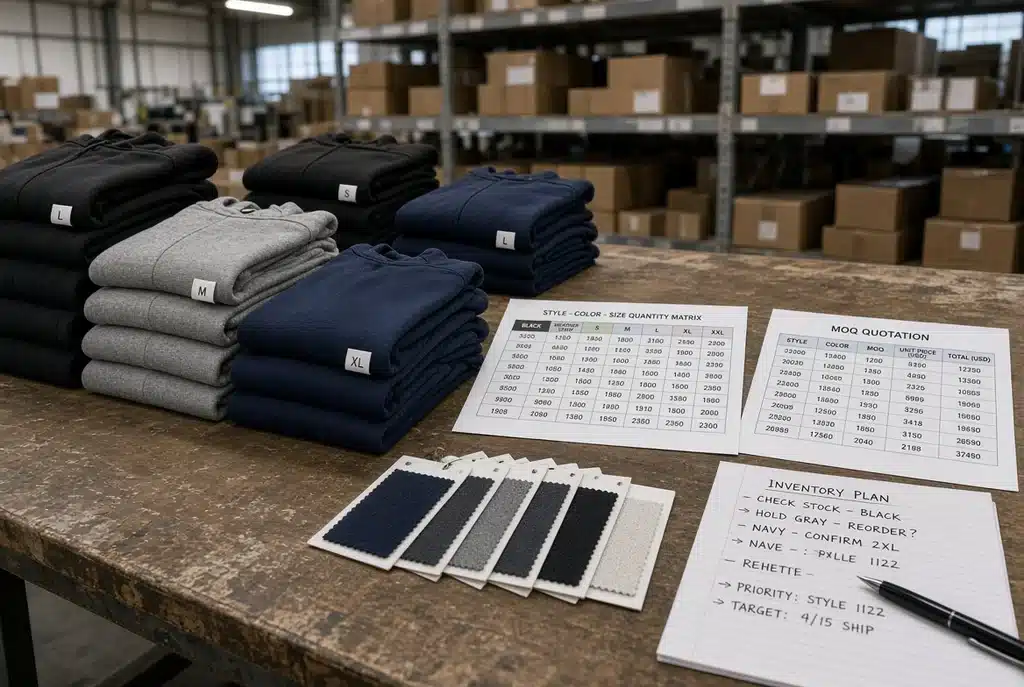
Private label apparel planning table with style- and color-separated garment bundles, size labels, fabric swatches, a style-color-size matrix, MOQ notes, and inventory documents in a clothing factory warehouse
Blog

How Style, Color and Size Count Affect Clothing MOQ and Inventory

A practical planning guide for private label brands, startups, retailers, and sourcing teams on how style, color, and size count shape clothing MOQ and inventory. It shows how to build a workable quantity matrix, confirm the factory’s MOQ basis, and avoid overstock, stock gaps, and fragmented production.

Nested graded pattern pieces showing size steps next to a size spec and measurement sheet for clothing brand pattern grading
Blog

What Is Pattern Grading? How It Differs From Pattern Making

Founders, designers, and sourcing managers can use this guide before they size a collection. It explains what pattern grading is, how it differs from pattern making, and why a grade only works after the base fit and the size spec are locked. You will see which decisions change the grade, which mistakes send it back to the table, and what to have ready before bulk cutting.

Production garment pattern pieces with grainlines, notches, and labels beside fabric and a partially sewn sample for a clothing brand pattern guide
Blog

What Is Pattern Making in Fashion? A Complete Guide for Clothing Brands

Written for founders, designers, and sourcing managers who need a pattern before they sample. It explains what garment pattern making actually produces, which marks make a pattern production-ready, and how fabric, fit, and sample comments change the draft. Use it to decide what to send a pattern maker, and what to lock before bulk cutting starts.

A workshop checker measures a T-shirt on a factory table and checks the chest reading against a visible garment measurement tolerance chart before the lot is released.
Blog

Garment Measurement Tolerance: How Apparel Brands Should Set Acceptable Variations

A working guide for founders, product managers, and sourcing leads who must set garment measurement tolerance before cutting. It covers which points need a tighter band, how fabric, wash, and stretch change the realistic range, and how to write point, size, sample, and wash state into a spec. Readers leave with a checklist they can paste into a purchase order.

Garment inspector classifying a wrong fiber label, an open seam, and a loose thread against a defect list on an inspection table during critical vs major vs minor defect review
Blog

Critical vs Major vs Minor Defects in Garment Inspection

Founders, product managers, and sourcing leads use this guide when a shipment passes inspection and still comes back. It explains how critical, major, and minor garment defects differ, why the same flaw can change class by product and wearer, and how to write a defect list into the purchase order. You will leave with classification decisions you can hand to an inspector before the lot is pulled.

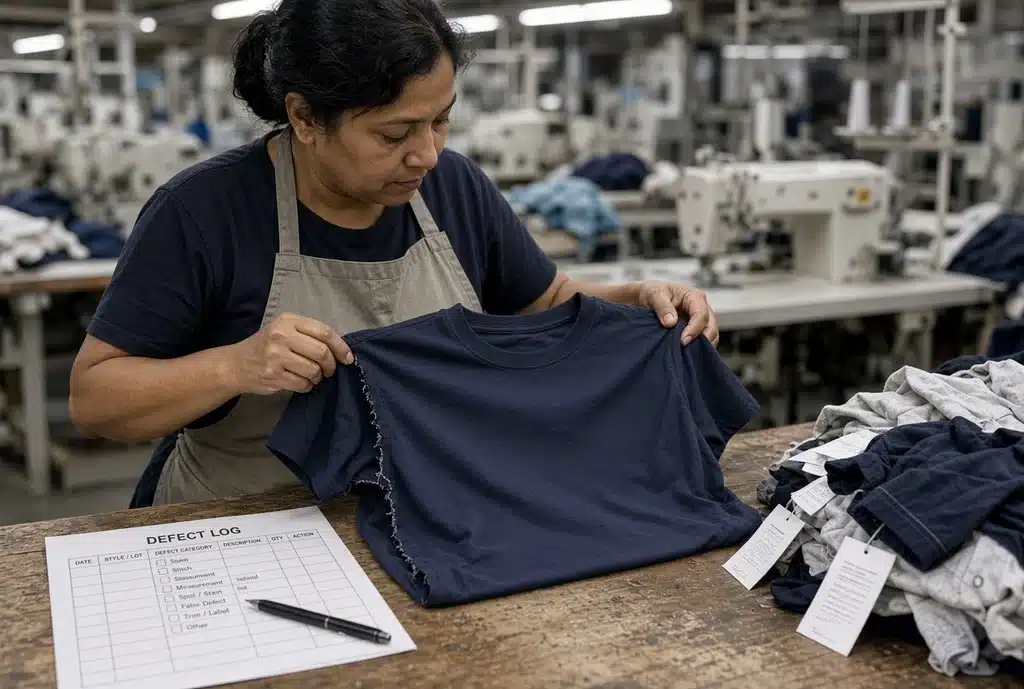
A factory checker reviews a navy T-shirt with an open seam and puckering beside a defect log on an inspection table, categorizing sewing defects before release.
Blog

Sewing Defects in Garments: Common Problems, Causes and Corrective Actions

This guide is for founders, product managers, and sourcing leads who need to name sewing defects before a shipment argument starts. It covers skipped stitches, open seams, puckering, needle damage, and fabric-related failures, plus the causes in needle choice, thread tension, operator method, and machine setup. Use it to decide what to document, what to correct on the line, and what a sewing defect checklist should record.

A checker categorizes an open seam, skipped stitches, and a stain on a sweatshirt beside a defect log and checklist during garment defect inspection before shipment.
Blog

Common Garment Defects: Types, Causes and Prevention

For clothing brand founders, product managers, and sourcing leads, this guide sorts common garment defects by where they start: fabric, stitching, measurement, decoration, labels, and packing. It explains the factory causes behind shade breaks, open seams, size drift, cracked prints, and mixed cartons, then gives the checks to lock before cutting, on the line, and before release.

Checker reviewing a laid-out garment sample beside an AQL chart and accept/reject tally during final lot inspection
Blog

AQL in Garment Inspection: Levels, Sampling and Acceptance Explained

Founders, product managers, and sourcing leads use this guide when a purchase order says AQL 2.5 and nobody can say what that means on the floor. It shows how lot size and inspection level become a sample size and accept/reject numbers, why 0, 2.5, and 4.0 are buyer choices rather than a clothing law, and which lines belong in the inspection instruction before the first carton is opened.

Approved sample, measurement spec, finished T-shirt, and checklist on a factory inspection table during garment quality control for a clothing brand
Blog

Garment Quality Control Checklist: What Clothing Brands Should Check

Written for founders, product managers, and sourcing leads who need checks they can send with an order. It covers what to lock against the approved sample, what fabric and trim inspection should catch before cutting, which construction and measurement checks belong on the line, and what to confirm before a shipment leaves, including labels, assortment, and carton marks.

滚动至顶部