

How to Design an Oversized Hoodie: Fit, Proportions and Construction
This guide helps clothing brand founders, designers, and product developers build an oversized hoodie on purpose. It explains where volume should come from, how body, shoulder, sleeve, hood, pocket, and rib proportions work together, and which fabric and sample checks stop a style from looking too long, too wide, poorly balanced, or hard to sew.

T-Shirt Print Placement and Size Guide: Front, Back, Chest, and Sleeve
This guide is for clothing brands, designers, merchandisers, and sourcing teams planning a printed tee. It explains how to set print dimensions, choose garment reference points, and check front, back, chest, and sleeve positions against real proportions. Fit, grading, and a physical sample can change a placement that looked right on a mockup. The ranges here are planning references, not a universal size chart.

Screen Printing vs DTG: Which Is Better for Clothing Brands?
Clothing brands often treat screen printing and DTG as rival methods. This guide shows how to choose between them using artwork complexity, order quantity, garment compatibility, color requirements, and the finish the wearer should feel. It is written for founders, designers, merchandisers, and sourcing teams who need a shortlist, not a universal winner, before they request a printed sample.

Types of T-Shirt Printing: How Clothing Brands Should Choose
Clothing brands can use this guide to match artwork, fabric, quantity, placement, and finish with a suitable printing method. It walks through screen printing, DTG, DTF, and specialty effects without naming a universal winner, and it shows what to define before sampling so the approved shirt becomes the production reference.
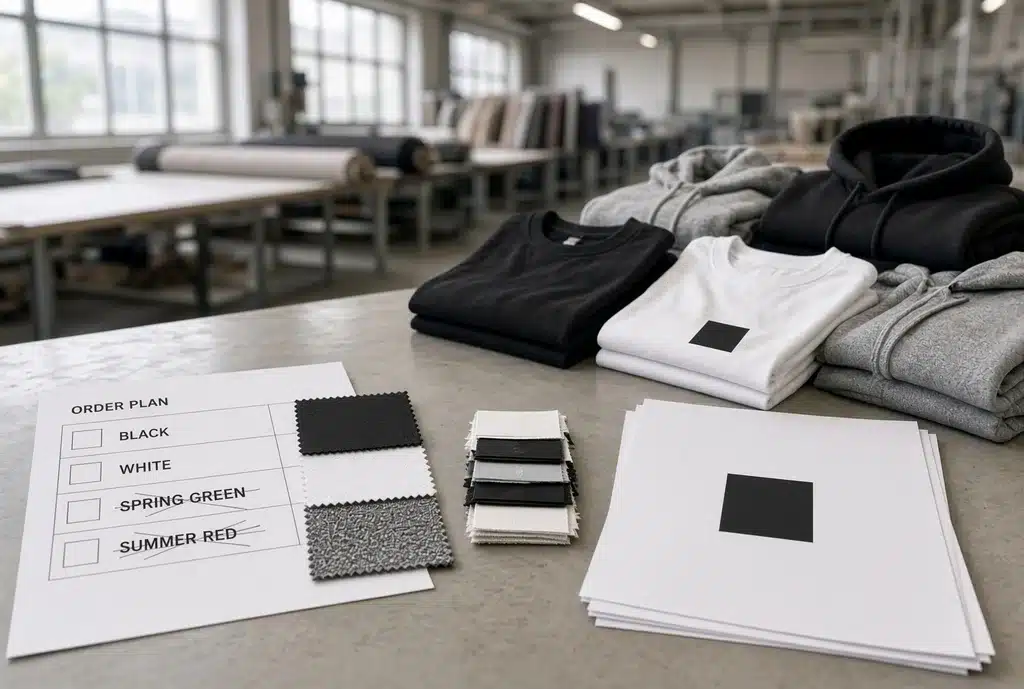
How to Reduce Clothing Manufacturing MOQ Without Compromising Quality
Written for founders and product leads at small clothing brands, this guide clears up why a quoted style minimum is rarely the real number. It shows how fewer colorways, stock fabric, and simpler trims can lower the effective MOQ, and which construction details must stay fixed so quality does not drop with the quantity.
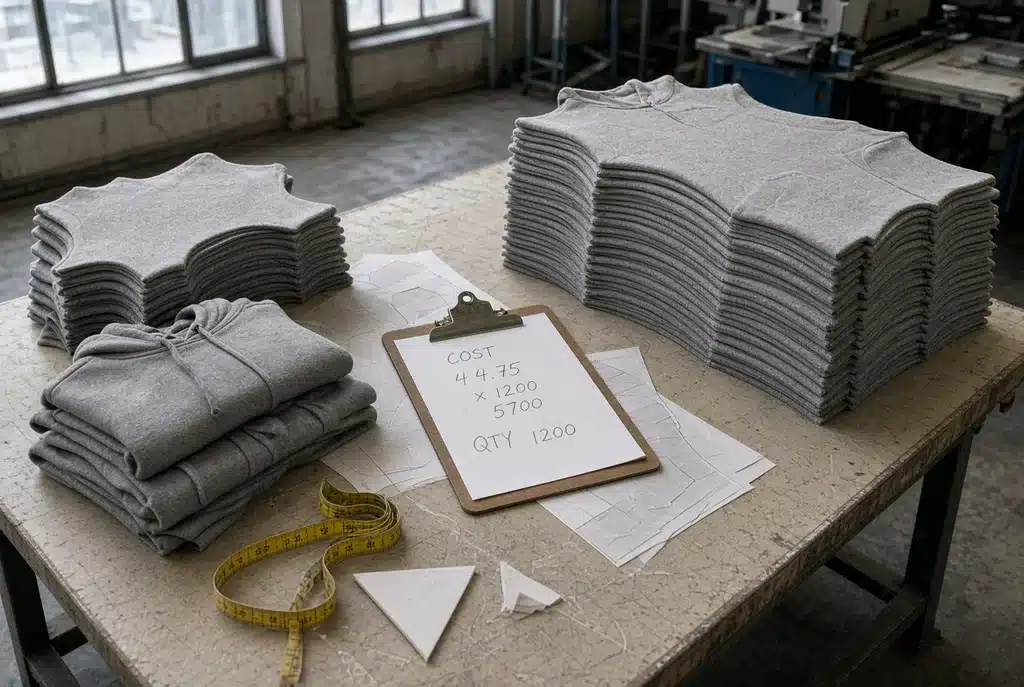
Small-Batch vs Bulk Clothing Production: MOQ, Cost, and Risk Compared
Founders and product leads at clothing brands use this guide when a lower unit price makes bulk look like the obvious choice. It compares small-batch and bulk production on MOQ, unit cost, cash outlay, lead time, and inventory risk. The piece shows how sell-through, reorder rate, and cash position should decide order quantity, so a brand does not buy a price its sales cannot support.

How Long Does Small-Batch Clothing Production Take?
Founders and product leads at small clothing brands often treat a sewing quote as the whole schedule. This guide separates sample approval, material in-house, ex-factory, and door-to-door dates, and shows where fabric, revisions, artwork, and freight actually sit. Use it to build a first-collection plan you can defend, instead of a launch date that breaks at the first fit comment.
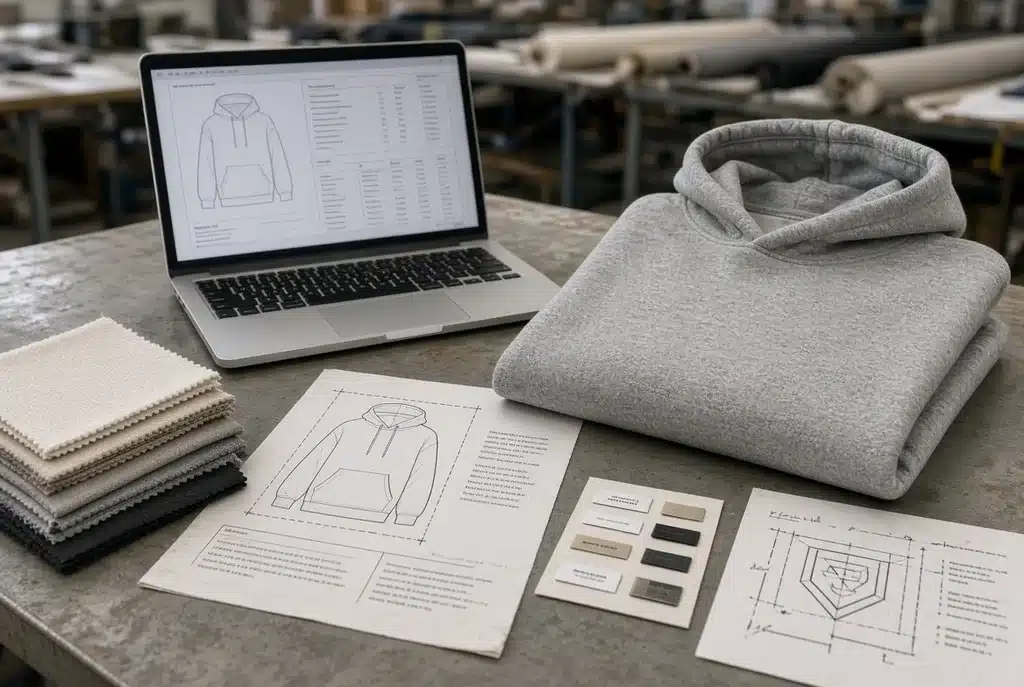
How to Prepare a Tech Pack for Small-Batch Clothing Production
Founders, designers, and product leads at small clothing brands often send a sketch or a mood board and call it a tech pack. This guide explains what a factory actually needs before it can sample or quote: measurements, materials, construction, labels, artwork, and tolerances. You will leave with a one-page style brief method and a checklist for a factory-ready pack.