
Custom kids clothing manufacturing lead time is not a single factory number. The calendar only becomes useful once you separate product-development review, pattern work, fabric and trim sourcing, sample rounds, buyer approval, pre-production preparation, bulk cutting and sewing, decoration, inspection, packing, and shipment. A quote labeled “production time” often covers the sewing line only, and leaves out the weeks before the first cut and the days after the last stitch.
Build the schedule backward from the date the goods must be available, and treat every buyer approval as a critical-path event. A children’s T-shirt in stock cotton jersey and a French terry sweatshirt in a custom color will not share a timeline, even if both leave the same factory. The gap sits in materials, sample revisions, and how fast comments come back—not in a universal week count.

Separate the Custom Kidswear Timeline Into Stages
A usable kidswear manufacturing timeline is a stage list, not one bar on a chart. Most custom children’s orders pass the same gates: requirement review, pattern development, fabric and trim sourcing, first sample, fit comments and revisions, sample approval, pre-production preparation, bulk production, decoration and finishing, inspection, packing, and shipment.
Some stages can overlap. Fabric inquiries can start while the pattern room is still reading the measurement chart. Bulk cutting cannot. If the sweatshirt is still “something soft, around mid-weight,” there is nothing to lay. A two-style program can still stall on rib color, neck binding, or an unseparated print. Duration follows complexity and how complete the file was on day one.
Identify the Critical Path
The critical path is the chain that sets the earliest finish date. Slip one task and the arrival date moves. For many kidswear orders it runs through material confirmation, sample approval, bulk fabric readiness, production, inspection, and shipment. A hangtag can often be finished while the T-shirt sample is in transit. A custom French terry shade cannot. If the T-shirt uses stock jersey, fabric is not the constraint—sample comments are. Write down what cannot slip: body fabric, rib, size chart, artwork placement, labels, and the production sample.
Distinguish Calendar Time From Active Factory Time
Factory working time is hours spent patterning, cutting, or sewing. Calendar time also includes weekends, holidays, courier days, unanswered comments, and the wait for a vessel. Bulk sewing starts only after patterns are graded, fabric and labels are in house, and the line has a slot. It ends before rework, packing, and freight. Do not paste a sewing estimate onto a launch date and call the rest buffer.
Product Development and Tech-Pack Readiness Affect the Start Date
The clock does not start in any useful sense until the factory can see the product. A complete tech pack, or a reference sample with written exceptions, shortens the question list. A mood board does not.
Before sampling is scheduled, the factory needs age range, fit, fabric direction, trims, artwork, labels, size run, quantity shape, and packing method. A project with those points written down can move into custom kids clothing manufacturing with a real start date. A sketch labeled “kids sweat set, oversized, soft” cannot. A T-shirt with a chart, a jersey weight, a neck finish, and a one-color print can go to pattern after a short clarification. A sweatshirt still needs body length, shoulder, hood or crew, rib ratio, pocket decision, and fabric weight. Those sit in front of the sewing calendar.
Complete Information Reduces Avoidable Delays
Missing sleeve length, artwork with no placement, or “heavy” with no weight range creates another email loop. Mark confirmed items versus open decisions, and give each open item an owner and a date. A neck that is tight on a 4-year-old size, or a sleeve that finishes above the wrist once the shoulder is corrected, sends the style back to pattern.
Complex Styles Need More Development Decisions
A jersey T-shirt has a short list: body, sleeve, neck, hem, decoration, label. A hoodie adds a hood, drawcord, pocket, and cuff. A lined jacket adds lining and hardware. A multi-panel dress adds seam match. Each extra operation is another place a revision can land. That is not a fixed number of extra weeks. List the operations before anyone promises a sample date, and schedule the T-shirt and sweatshirt as two paths that may share a ship date.

Fabric, Trims, and Material Availability Can Add Time
Material status decides whether sampling can start this week or only after a mill develops something new. Count the whole bill, not only the body: stock cloth versus cloth knitted to order, custom color and shade approval, brushing or compacting, rib, elastic, snaps, zippers, thread, print or embroidery materials, labels, hangtags, bags, and cartons. A color that cannot be dyed until quantity clears a mill minimum is its own gate. Stock jersey in a warehouse is a different problem from French terry that still has to be knitted, dyed, and finished.
Stock Materials Versus Custom Development
Stock fabric is easier to sample because hand feel, weight, and color already exist. Custom color or finish adds a loop before the sample means anything for bulk. Stock cotton jersey can be cut for the T-shirt as soon as the pattern is ready. A custom French terry color is not approved because a lab dip looks close on a screen. Wait for a shade the brand can sign, or mark the sweatshirt as a fit-only proto in substitute cloth.
That is the practical core of kidswear fabric sourcing. Sourcing is finished when quality, color, and quantity can support sampling and the later bulk cut. Confirm rib with the body. A cuff in the wrong modulus can look fine on a desk and fail a home wash.
Approve Materials Before Bulk Ordering
A liked swatch is not a bulk booking. Check color, weight, hand feel, construction, and availability under factory light, next to the trim. Changing fabric after sample approval resets planning: a new jersey weight changes drape and print hand, and a new French terry changes length after wash and cutting yield. Lock the bulk quality before the line is scheduled.
Sampling, Revisions, and Buyer Approvals Control the Schedule
Sample development is where the kids clothing sample-to-production timeline is won or lost. A prototype, fit comments, material confirmation, revisions, and approval are normal. Round count depends on the starting file and the style. There is no universal sampling duration worth publishing. Kidswear sample development has to settle measurements, fit, fabric, trims, branding, and whether the style can be sewn at the planned quantity before bulk is released.
The First Sample Is Not Automatically Production-Ready
The first sample is a test, not a souvenir. A children’s T-shirt often shows a tight neck, a short sleeve once the shoulder is corrected, or a print that sits too low once body length is right. The sweatshirt may show a flaring rib, a pocket that pulls the hem, or cloth that grows after a wet press. Hiding that to protect a date pushes the correction into bulk, where it costs more.
Buyer Response Time Is Part of the Calendar
The factory cannot sew the next sample while comments arrive as three separate messages. Plan time to fit the sample, consolidate notes, approve materials and artwork, and sign the reference. One comment sheet beats a week of partial replies. Name one approver and a date. Courier days count: a sample that leaves on Friday and arrives the next week has already used calendar time.
Changes After Approval Can Restart Work
A signed sample is the bulk reference. Changing fabric, pattern, a measurement, decoration, labels, or packaging after that signature can force a new sample or a new material booking. A color change after cloth is dyed is the expensive version. If the launch cannot absorb a restart, new ideas belong in the next drop.
Pre-Production Preparation Comes Before Bulk Sewing
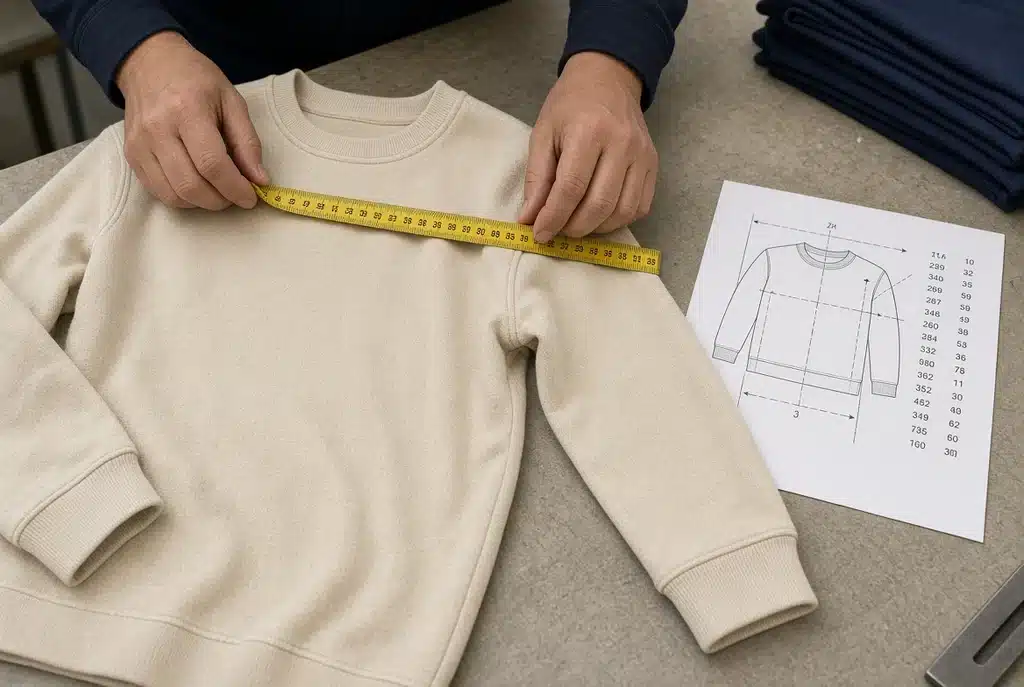
Sample approval is not the cutting date. After sign-off, the factory still has to issue final patterns, graded sizes, markers, material allocation, sewing instructions, production artwork, labels, packing details, and a line plan. Skipping that list usually returns as recuts, wrong labels, or a size never graded from the approved body.
Confirm the Production Reference
Cutting, sewing, printing, and packing should use one named set: approved sample, measurement chart, materials, artwork placement, labels, and packing instructions. “Approved proto-2, chart revision B” is a control. “The latest sample” is not. Keep separate references for the T-shirt and the sweatshirt.
Plan Materials and Production Capacity
Fabric, trims, labels, packaging, and the sewing slot have to land together before cutting. A T-shirt body in house is not a ready order if the rib or main label is still in transit. Ask when all bulk materials will be in house, and when the order enters cutting. Those answers are a gate, not a capacity promise.
Bulk Production Time Depends on Style Complexity and Order Structure
Custom children’s clothing production time in bulk follows the garment, the order shape, and the line’s existing schedule. Quantity, colors, sizes, construction, decoration, and finishing all move the number. A cotton T-shirt is not a printed sweatshirt, a hoodie with pockets and drawcords, a multi-panel dress, or a lined jacket. The example T-shirt may be shoulder, neck, side, hem, print, and press. The sweatshirt adds rib and a pocket. Comparing those by pieces per day, without naming the style, is a useless average.
More Styles and Colors Increase Coordination
More colorways mean more dye lots, cutting plans, decoration changeovers, and packing instructions. A second sweatshirt color is not a footnote if it needs its own rib match and thread. A toddler-to-youth range is several bodies, not one body scaled by eye. Adding colors after the slot is booked means the schedule should be rebuilt. That coordination is kidswear production management: materials, instructions, approvals, stages, and buyer communication on one calendar, so a late label does not surface on cutting day.
Decoration and Finishing May Run as Separate Operations
Printing, embroidery, washing, and pressing often have their own queues. A sewn T-shirt can still wait for a print table. Confirm whether the sweatshirt is embroidered on the panel or on the finished garment before bulk starts. A jump from one print color to four during bulk is a new plan, not a same-day extra.
Inspection, Packing, and Shipping Belong in the Delivery Plan
The order is not ready when the last seam is sewn. Inspection, rework, folding, labeling, carton packing, and shipment coordination sit between the line and the warehouse. Check measurements, seam security on smaller sizes, neck stretch, decoration position, labels, and carton marks. A failed print placement or a wrong care label means the style is not finished.
Allow Time for Quality Checks and Corrections
Inspection can find measurement drift, open seams, wrong labels, or a size mix. Relabeling or recutting a failed bundle moves the release date. Do not plan collection for the hour the line is supposed to finish. No inspection duration is universal, and no check erases every defect. Agree what is checked, who signs release, and what happens if a size fails.
Separate Factory Completion From Arrival Date
Factory completion is the day goods are released for shipment, not the day they reach the warehouse. Transit depends on destination, method, documents, customs, and whoever books the freight. A missed sailing moves the arrival without any change in sewing.
Kidswear shipment coordination means lining up export documents, freight, delivery requirements, and the logistics partner while production is still moving, not the week cartons are already closed. Ask for the completion date and the handoff as separate lines, then add the transit quoted for that lane. A transit estimate is not a promised delivery date.

Build a Production Calendar With Approval Gates
A production calendar works when every handoff has an owner. Use gates instead of one lead-time cell: brief received, technical review, materials selected, prototype requested, fit comments returned, revised sample reviewed, bulk materials approved, final sample approved, pre-production instructions issued, bulk scheduled, inspection done, packing done, shipment released, delivery confirmed.
Each gate needs an owner, the information required to pass it, a date, and the consequence if it slips. “Brand returns one fit comment sheet” is a gate. “Factory works faster” is not. Let the T-shirt pass materials earlier if the jersey is stock and the French terry is custom. Share a ship date only after both paths fit.
Plan Backward From the Required Arrival Date
Start from the date goods must be available, then step backward through handoff, packing, inspection, bulk, materials, sampling, and the design decisions sampling depends on. Add room for a revision, a material delay, a local holiday, and a freight slip. There is no universal buffer worth printing. An undyed sweatshirt color needs more room than stock jersey. A launch set before sample approval is a wish. Move the date if the backward plan lands late.
Ask What the Custom Kids Clothing Manufacturing Lead Time Includes
Two factories can quote different timelines and both be internally consistent. One number may start after the deposit, another after tech-pack approval, a third only after the sample is signed and bulk fabric is in house. Ask which milestone starts the clock, and whether pattern work, sourcing, revisions, approval days, decoration, inspection, packing, and shipment sit inside it. The shorter number is often sewing with the waiting removed.
If styles, a quantity range, a material direction, and a target arrival date are already defined, discuss your kidswear production timeline against that file. A credible schedule needs the actual garments, the open decisions, and the destination, not a generic week count.