
Small-batch clothing production lead time is the days it takes from a confirmed brief until an ex-factory date, and this isn’t necessarily the days spent making the clothes on a sewing line. The first t-shirt drop or three colour hoodie capsule runs on fabric confirmation, sample revisions and late artwork. The short part is frequently cutting and sewing.
The other miss is the length of time from order to warehouse. One segment is production lead time. Freight, customs and receiving are added to the door-to-door time. This means, a usable plan begins before the factory begins cutting the first marker, with a sample being approved on a different date to the material in-house, to the ex-factory date and to the arrival date.
The Stages Behind a Small-Batch Production Timeline
A small batch apparel production timeline isn’t one block on a calendar, it’s a chain. When a date gets missed, all dates after that slide. The stages listed below are the ones that actually determine a first collection.
Sourcing, Pattern, and Sample Rounds
The first weeks typically go to fabric and trims. A mill can turn a lab dip and a roll booking around in days with a jersey in black and ecru cotton. To get the feel and fit that one likes, a custom-dyed French terry, or a rib that must be imported from another source, can require three to six weeks before anyone truly has a hand-feel to approve.
If the brief doesn’t move, then pattern work will run in parallel. There are four distinct jobs: prototype, fit sample, size set and pre-production sample. There are lots of first collections that start with one round and end with 3. The tee appeared great until it began to stretch on the chest. The hoodie fit was accepted and the hood lining and drawcord were changed. The ex-factory date is moved with each revision as it is bulk fabric, trims and decoration files are based on approved sample, not the original sketch.
The “we like the proto” to “the factory can cut” time is the sample to bulk timeline. The majority of the first drops slip away from the launch week that they already announced, in that gap.
Bulk Material, Cutting, Sewing, and Decoration
A sewing line is not used for cutting until it is free. It begins as the bulk material is in-house: fabric, rib, thread, labels, zippers, and the rest of the style without which it cannot travel. A material in-house date is the date that those goods are checked and released to the cutting table and not the date that a supplier claimed it left.
In the short run, decoration can last longer than sewing. A 3 color hoodie capsule with left-chest embroidery and a back print can sew in a few days and still await digitization, a stitch-out approval and screens. Typically, there are restrictions that need to be overcome such as custom dye, imported trims, and embroidery digitizing. The word of the day for a sewing estimate can be a genuine seven to ten days. It is also the section that begins at the end. A small jacket run is even slower: It’s rare that the shell, the lining and the hardware come in on the same day and the pattern takes time to settle as it does for a tee block.
Inspection, Packing, and Freight
After sewing and decoration there are inspection, packing and export documents. Don’t think that once you have a few colours and sizes, it’s a ‘same afternooon job’ – appearance, carton marks and measurement checks are not.
Ex-factory date refers to the date when the goods have been completed, packed and ready to be exported from the factory. To be fair, it’s not the day they arrive in your warehouse. On many Asia-to-US or Asia-to-Europe lanes, that date becomes a door-to-door time of one to two weeks, before any customs holds, due to air freight. Sea freight typically takes several weeks (plus receiving and destination handling). Not one date – you put four dates in: sample approval, material in-house, sample ex-factory, material in warehouse.
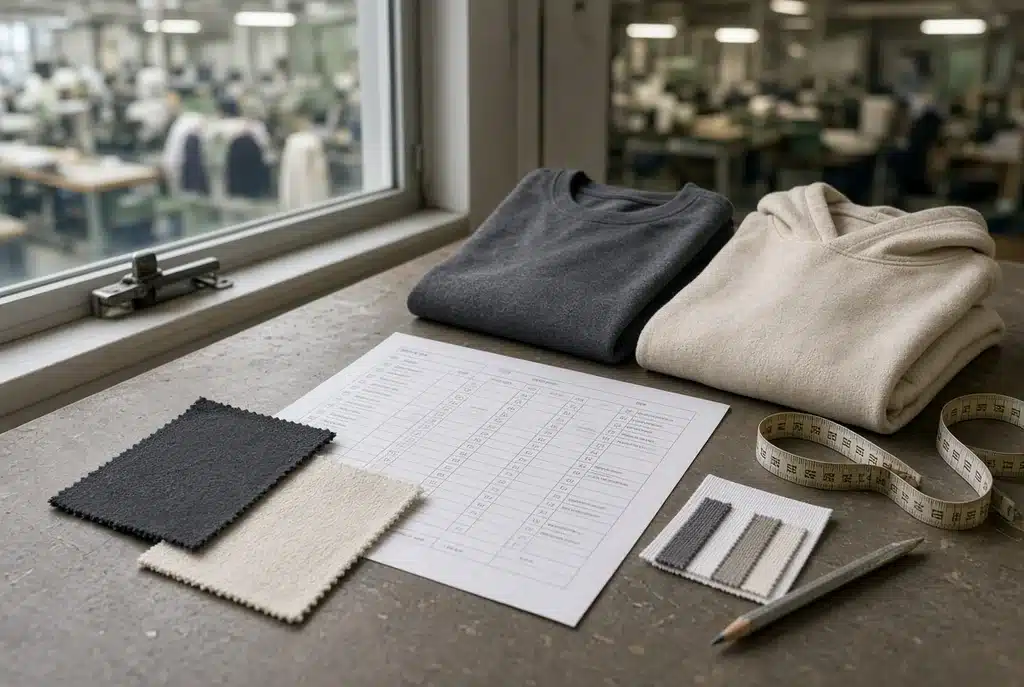
Typical Planning Bands, Not Promises
Take small-batch clothing production lead time as a band, NOT a promise. If the line is open, stock-fabric tees with a basic print can go from sample to ex-factory in just a few weeks. A custom shell, lining and hardware can be a couple months before a small jacket rolls off the floor. Neither of these figures is capable of surviving a late lab dip or a closed sewing week. Clothing production lead time will be shifted as the input shits his.
Fabric and Trim Availability
A small run is kept within a short window of stock fabric. When the sewing room is not being used, custom color, special knit or a trim that has to be imported can add weeks to the time. A cutting table can be setup on a Monday and sit without anything being cut on it because the mill moved a dye lot, or the zipper tape came in the wrong color. Ask what the quote is assuming – i.e. greige goods on hand, named stock program or a mill slot that is not booked.
Sample Revisions and Approval Timing
The anchor is the sample approval date. Off it hangs bulk material bookings, and the cutting plan. An additional fit round or artwork 10 days late does not count 10 days. It’s 10 days, plus the next available day in the mill, print shop and line. The primary reason a first-collection calendar fails to launch is for late approvals.
Factory Load and Seasonality
A small order doesn’t queue. Lines become full with larger programs ahead of holiday production and shipping in the spring. If the manufacturer makes 300 hoodies a week in February, they may not be able to do so in August. Before scheduling a marketing date, inquire about their current capacity and the time they are busiest.
How long small-batch clothing production takes is easier to read once you can see the garment manufacturing process as a sequence of handoffs. The calendar only holds if each handoff has an owner and a date.
Common Timeline Mistakes Small Brands Make
Setting a Launch Date Before Sampling
Brands publish a drop date as the ads need it but then discover the fabric hand-feel is incorrect, or the fit needs to be retested. Do not close the launch until sample is approved and bulk material confirmed. A hard date prior to that is really a calendar invite that is only a leap of faith.
Ignoring Freight and Customs in the Plan
A realistic plan specifying the freight mode is a door-to-door plan. Air and sea will not work as a buffer. The clearance and receiving time must be on the schedule, not in a footnote. Maintain production and freight buffers on different lines. A late trim cannot be applied to a held shipment at the same time in one optimistic date. Time for clothing ex-factory door-to-door: its own plan, depending on the lane and the season.
Late Artwork and Branding Decisions
When care labels, hangtags, files, embroidery placements, woven labels and other things end up in the sewing machine, it interferes with the printing, embroidery, and packing of stalls. Secure artwork and branding prior to bulk order. Relabeling, reprinting cartons, and a packing line that can’t close are all immediate results of a decision made to change a neck label after cutting has begun, and all of these have a long tail.
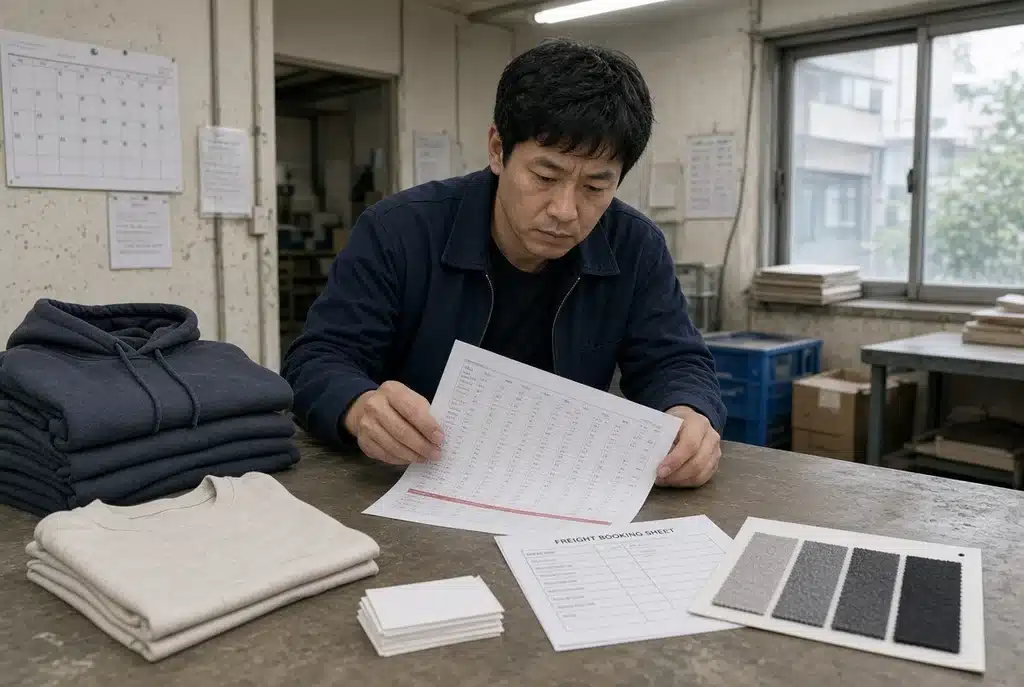
How to Build a Realistic Production Plan
Work Back From a Target Window, Not a Hard Date
It doesn’t start with a Tuesday, it starts with a window. “Mid-November to early December” provides the luxury to go backward: warehouse, freight, ex-factory, material in-house and sample approval. Add a little buffer to the revisions and a little buffer to freight. If only the plan that would occur if the date had no sample comments and the fastest boat, then the plan is already late.
Lock the Critical Path: Sample, Material, Artwork
The decisions made at three milestones move everything else.The decisions made at three milestones move everything else. The garment production plan of a small brand follows the movement of one. Don’t view them as “nice-to-haves” that can be treated as something parallel. They are the “path of greatest delay. There is a tee on the print file that has stock fabric. On the rib is still a hoodie with approved art.
Plan Separate Dates for Sample Approval, Material In-House, and Ex-Factory
Write three dates, and then add freight & receiving. The date of sample approval is the day that the factory confirms the sample. In-house date: date the fabric and trims are checked and released to cut. Ex-factory date: When packed cartons are ready to be given to the forwarder. That split makes it easy to avoid the “everything is late” surprise, as you’ll be able to tell which date actually slipped.
Questions That Make a Timeline Quote Usable
The 4–6 weeks statement is not a plan. It’s a range without the assumptions removed. Ask yourself what these weeks have in store to turn it into a startup clothing brand production schedule.
Clarifying Each Stage and Its Dependencies
Make the sample timeline by round, but not one at a time. Question the fabric and trim lead times taken, what happens in the event of the lab dip. Inquire about the final deadline for artwork to be submitted for printing and/or embroidery. If the date you select is the date of the sample’s approval, ask what the ex-factory date would be. The number seen in the initial e-mail is not the length of time it will actually take to make clothing of your style, it’s just a guess.
Confirming Freight and Door-to-Door Expectations
Ask them what modes of freight they can accommodate, how long it normally takes for goods to arrive by air or sea to your market, what documents are required to customs, and what a realistic door to door window may be for a first collection? If the factory doesn’t allow quotations of any kind, you still have the majority of the calendar. Be sure to obtain that leftover in writing before you make your booking.
Summary Guidance – Using Lead Time as a Planning Tool, Not a Promise
When used as a planning tool, small-batch clothing production lead time is useful. Track all the way, lock sample approval, bulk material and artwork and maintain differentiation dates for material in-house/ex-factory/door to door. Once the collection has landed, record what was the real object that moved the calendar. If you can remember which handoff “burned you”, then the next run is a little shorter.